UK Non GamStop Casino Meaning and Licensing Features
 Available in GB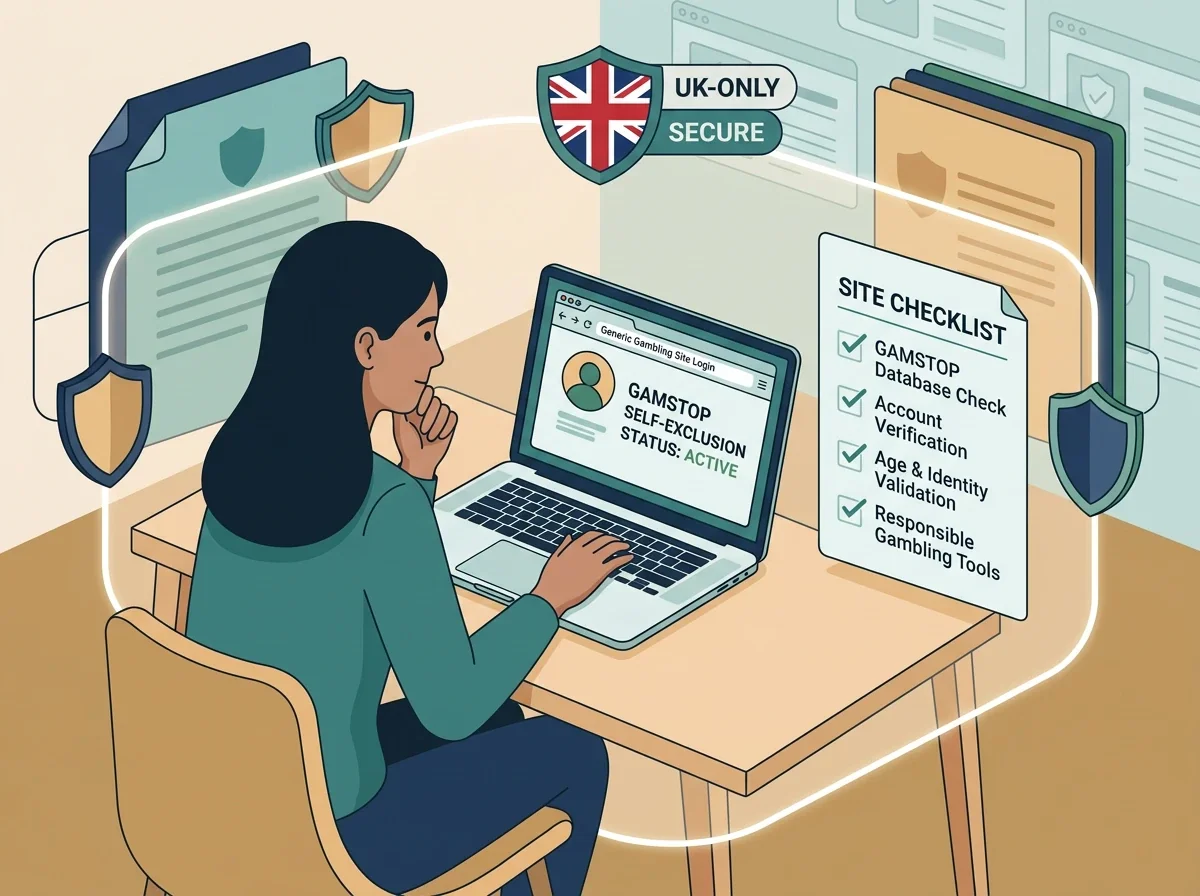
- Plain meaning
- Why it is not an endorsement
- What to assume and what not to assume
- A calm decision path
- When to shift to support
The Exact Meaning of Non GamStop Gambling Sites
GAMSTOP is the national online self-exclusion scheme for Great Britain. The Gambling Commission explains that all relevant GB-licensed online gambling businesses must participate in GAMSTOP. When a person signs up, the point is to block access to participating online gambling businesses for the chosen exclusion period. GAMSTOP’s own terms also explain an important limit: the scheme cannot prevent access to services run by organisations that do not participate.
That is why the wording can be confusing. “Not on GAMSTOP” does not by itself tell you that a site is lawful for you, suitable for you, reliable, fair, quick to pay or careful with documents. It only points to a gap in a particular self-exclusion system. For a person who self-excluded, that gap can be dangerous because it may reopen access at the exact moment when the person wanted a barrier in place.
There is also a geography point. Gambling regulation often uses Great Britain wording, while Northern Ireland has separate gambling law. This guide therefore avoids treating every GB rule as if it automatically applied in exactly the same way across every part of the UK. For ordinary readers, the safer habit is to check which regulator, business and scheme are actually relevant before making any decision.
Why “outside GAMSTOP” is not an endorsement
A promotional description can make the phrase sound like a product category. That framing is misleading. A missing protection is not the same as a recommendation. A site might claim to be easy to join, quick to pay or open to UK players, but those claims need current proof from official records and from the site’s own terms. Without that proof, the wording is only a claim.
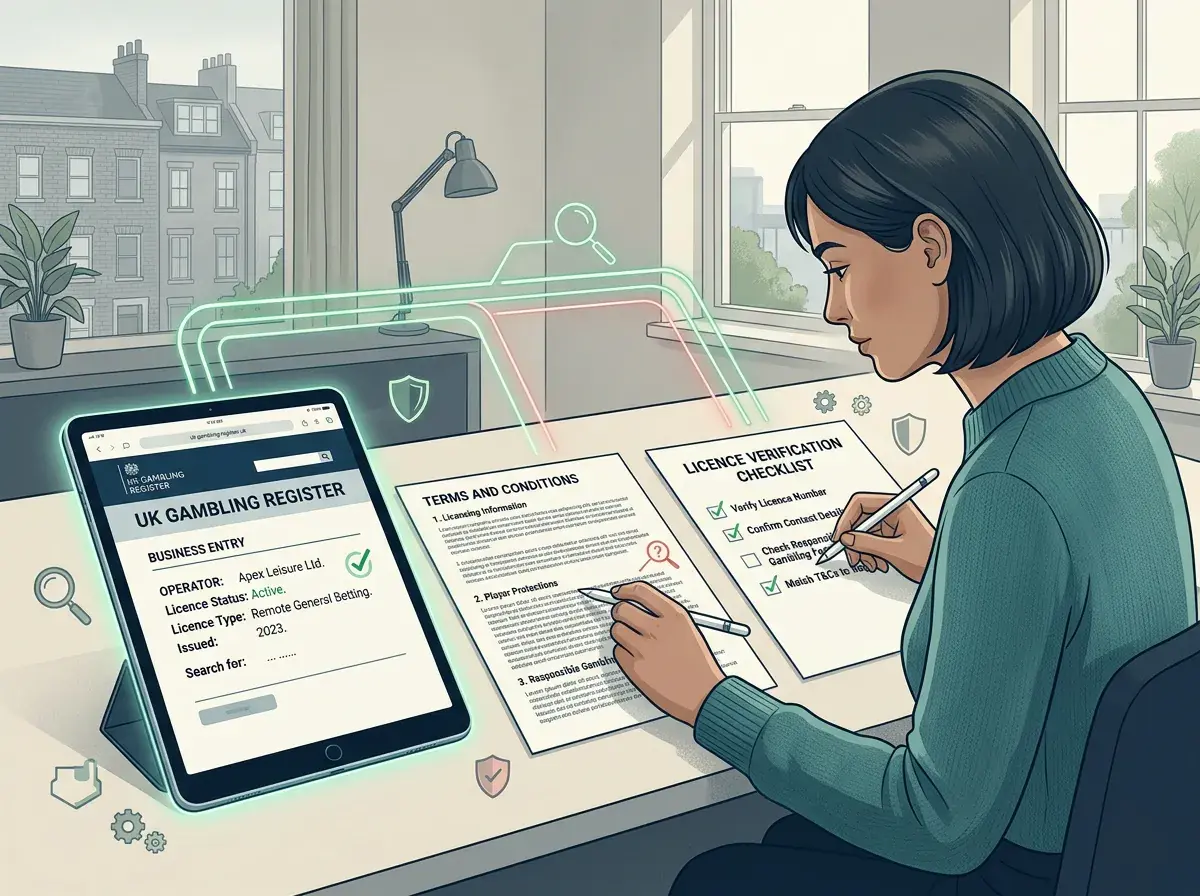
For Great Britain, the baseline is simple: remote gambling offered to consumers in Great Britain requires a Gambling Commission licence, including where the business is based abroad. The official business register is the place to begin a check, not a logo in a website footer, not a banner, and not a list created by someone else. Even a register check has limits. The register can help identify businesses, trading names, domains and account numbers, but it should not be read as a blanket guarantee that every claim on a page is correct today.
The most important boundary is personal. If you are already self-excluded, the terms of the scheme are built around not opening new gambling accounts, not logging in to existing accounts, and not getting around the exclusion. A guide that turns non-participation into an access route is working against the purpose of self-exclusion. A helpful guide should slow the decision down and point to support, blocking tools and money controls where those are relevant.
What to assume and what not to assume
| Phrase or claim | What is actually verified | What not to assume | Safer next step |
|---|---|---|---|
| “Not on GAMSTOP” | It may mean the site is not covered by the GAMSTOP scheme. | Do not assume it is safer, approved for you, or a better choice. | Pause if self-exclusion is relevant; read self-exclusion, blocking tools and getting help. |
| “UK players accepted” | The statement is only a claim until the business is checked. | Do not treat wording on a site as proof of GB licensing. | Use the Gambling Commission business register and compare details carefully. |
| “Licensed overseas” | An overseas licence may exist, but that does not answer the GB licence question. | Do not assume an offshore licence gives the same protections as a GB licence. | Check whether the business is licensed for Great Britain before depositing. |
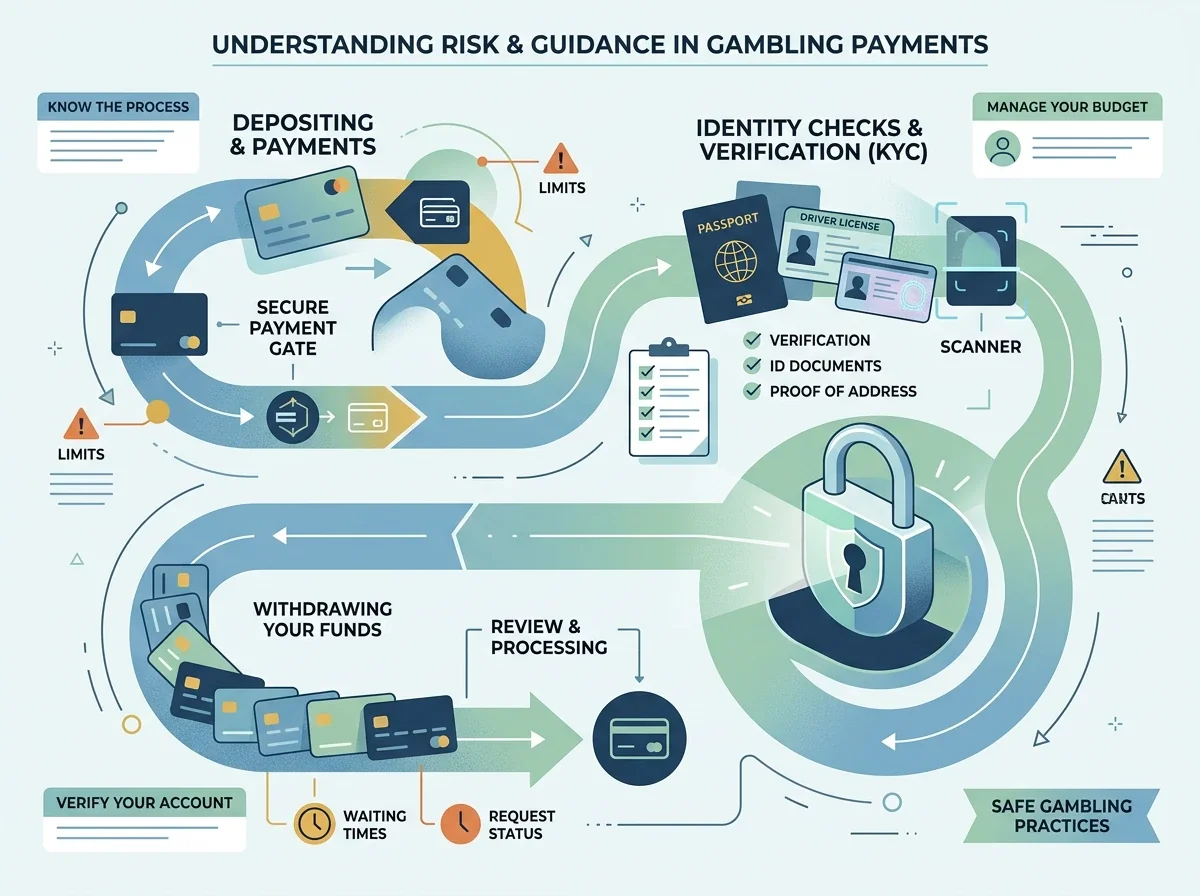
| “Easy withdrawals” | A general promise gives no proof of timing, checks or dispute routes. | Do not assume winnings, deposit balance or bonus-linked funds will be handled exactly as advertised. | Read payments, ID checks and withdrawals before sending documents or money. |
| “No extra checks” | Licensed online gambling normally involves age and identity checks before gambling. | Do not treat fewer checks as a sign of lower risk. | Verify the business and be cautious before uploading personal documents. |
A calm decision path
- If you are registered with GAMSTOP or want gambling to stop, change the task. The task is no longer comparing sites. It is protecting the barrier you chose, adding bank blocks or software blocks, and using support from services such as GamCare, GambleAware, the NHS, MoneyHelper or Citizens Advice.
- If you are only trying to understand the term, keep it narrow. Read it as a statement about scheme coverage. Do not stretch it into a statement about quality, legality, speed, fairness or suitability.
- If you are checking a site before depositing, move to official checks. Look for the business on the Gambling Commission register, compare the legal name and domain details, read terms on customer funds, withdrawals, bonuses, complaints and data handling, and be willing to walk away if the details do not match.
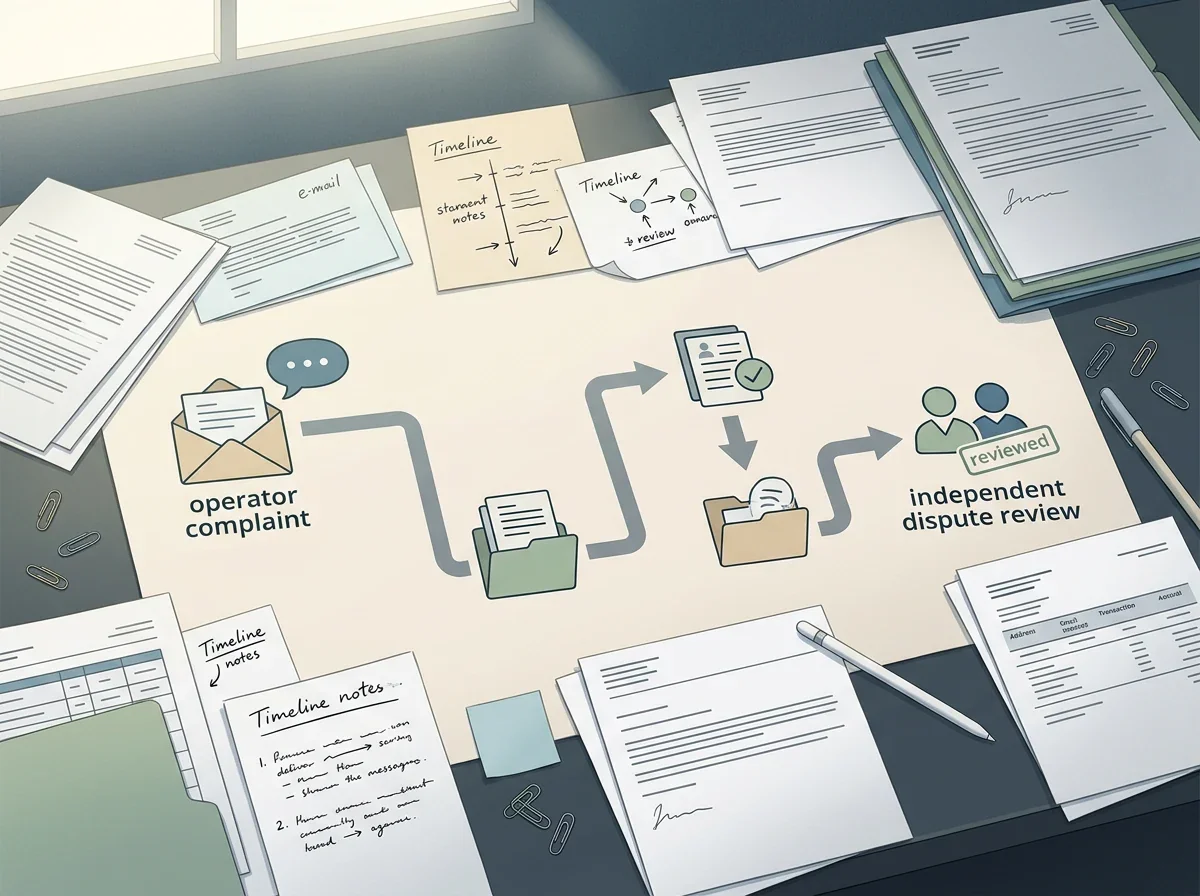
- If a payment or withdrawal issue already exists, gather evidence. Save account messages, transaction records, identity-check requests, terms that applied when you deposited, and the complaint timeline. Then follow the complaint route instead of trying to solve the issue through another deposit.
This order matters because different problems need different answers. A definition page cannot safely tell a self-excluded reader where to play. A pre-deposit check cannot promise that a later withdrawal will be smooth. A complaint guide cannot decide whether a business is fit for every future user. Keeping the task narrow reduces mistakes.
Once you understand the risks, the next vital step is learning how to check an online gambling site before you deposit to ensure your funds are safe.
For a complete overview of player safety, always refer to our trusted UK guide to casinos not on GAMSTOP before making any decisions.
What this guide will not help you do
It will not list casinos, compare bonus offers, suggest access routes, rank offshore sites or explain how to weaken self-exclusion. Those are not missing details; they are the wrong direction for this subject. The verified facts point toward a different approach: understand the limit of GAMSTOP, verify any business through official records, treat broad promises with caution, and use help or controls when gambling is creating harm.
It is also not legal advice about your personal circumstances. The right official page can confirm a general rule or process, but it cannot decide from a distance whether a particular account, transaction or dispute is covered in the way you hope. When the facts are specific, keep records and use the right complaint or support route.
When to shift from checking to support
If the reason you are looking at non-participating sites is that GAMSTOP is blocking you, the safer next step is to reinforce the block, not to look for a gap. GAMSTOP’s purpose is to help people exclude themselves from participating online gambling businesses. The Gambling Commission also points readers toward ways to block gambling transactions, and recognised support organisations explain tools such as blocking software, bank controls and advice services.
Support does not need to wait until the situation is extreme. It may be useful if gambling is affecting sleep, money, relationships, work, health or borrowing. It may also be useful if you find yourself repeatedly checking for ways to keep gambling despite a block. You can visit GamCare, GambleAware, the NHS gambling help page, MoneyHelper or Citizens Advice for support and practical guidance.
Where to go next on this site
- Use how to check an online gambling site before you deposit if your immediate task is verifying a business.
- Use payments, ID checks and withdrawals if you are unsure why documents or payment checks are involved.
- Use self-exclusion, blocking tools and getting help if GAMSTOP, bank blocks or gambling harm are part of the situation.
- Use withdrawal delays and complaints if a problem has already happened.
Common questions
Does “not on GAMSTOP” mean illegal?
Not from that phrase alone. It means the site is not covered by the GAMSTOP scheme, or claims not to be. For Great Britain, the licensing question should be checked separately through the Gambling Commission register and the site’s own details.
Does it mean safer for someone who self-excluded?
No. For someone who self-excluded, non-participation removes a protection rather than adding one. The safer response is to use support and additional blocking tools.
Can a logo in a footer prove enough?
No. A logo or short claim should not replace an official check. Compare the business name, trading name, domain information and terms through official and first-party documents before sending money or ID.
Created by the "Casino not on Gamstop" editorial team.