Casino Sites Not Registered With GamStop UK 2026: The Full Off-Register Guide
 Available in GB
Table of Contents
- What “Not Registered With GamStop” Actually Means
- Legal For You, Not For Them: The Gambling Act 2005 In Plain English
- Why UK Players Went Off-Register In 2026: The Regulatory Squeeze
- Top 10 Casino Sites Not Registered With GamStop UK 2026
- Comparison Table At A Glance
- The Licensing Reality: Curaçao, Anjouan, Malta
- Games Off The UK Rulebook: Slots, Live Dealer, Crash
- Payments And Withdrawal Speeds: The Honest Version
- Bonuses: What “£3,800 + 50 Free Spins” Actually Costs
- Bonus Expected-Value Calculator
- New Casino Sites Not Registered With GamStop In 2026
- Curaçao Vs European Operators: Practical Differences For UK Players
- Wales, Scotland, England And Northern Ireland
- How We Ranked These Operators
- Responsible Gambling If GamStop Isn’t There
- The 2026 Squeeze Math: Why The Gap Widens From April Onwards
- Final Read

GamStop covers every casino that holds a UK Gambling Commission licence. It doesn’t cover anything else. The sites in this guide are offshore-licensed operators that legally accept British adults, sit outside the national self-exclusion register, and — as of 2026 — offer terms no domestic casino is allowed to match. Six-figure welcome packages. Uncapped slot stakes. Credit cards at the cashier. Crypto that clears in twenty minutes. What follows is the ranked list, the licensing reality, and the parts most affiliate pages skip.
Jump straight to the top-10 ranking if that’s all you came for. If you want to understand what you’re actually signing up to before you deposit, read on.
What “Not Registered With GamStop” Actually Means
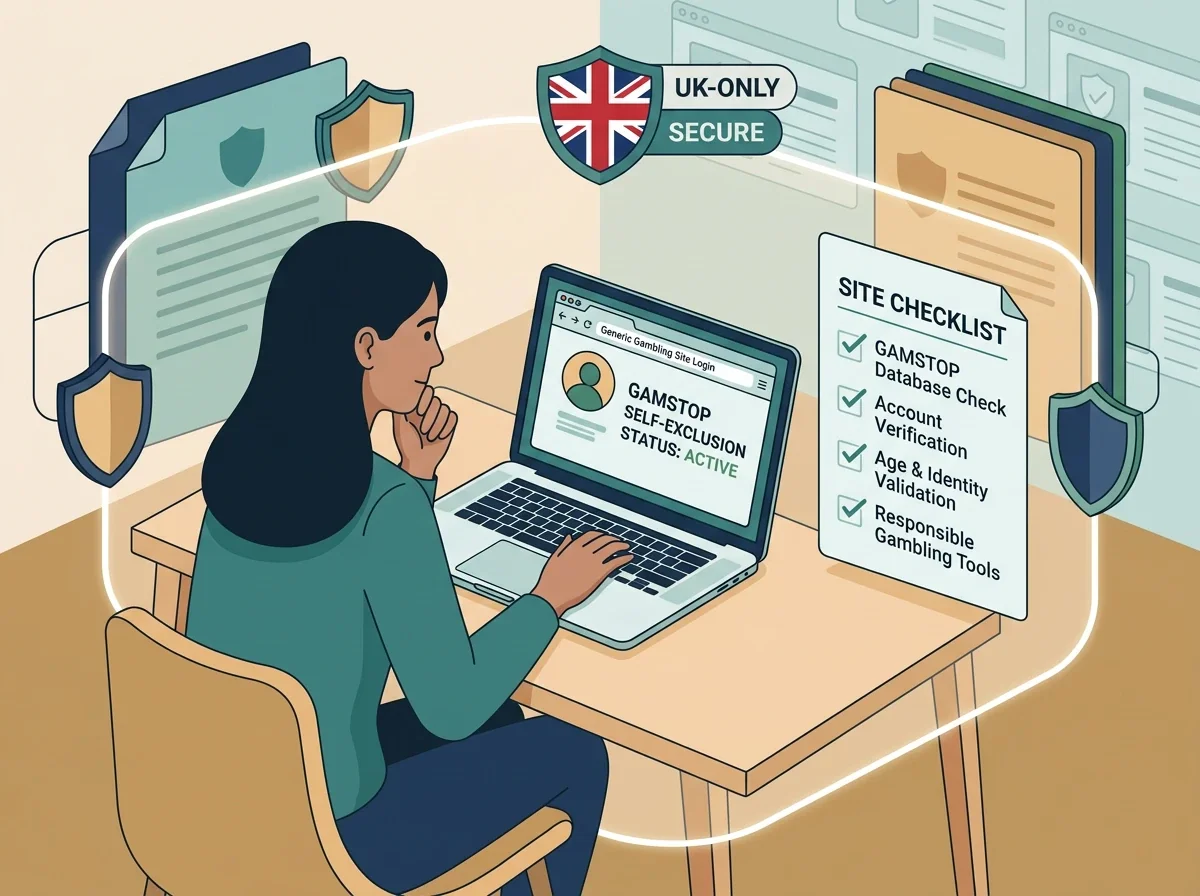
GamStop is a national multi-operator self-exclusion register run by a non-profit funded by the UK gambling industry. Since 31 March 2020, joining it has been mandatory for every UKGC online licence under LCCP condition 3.5.5. When a player self-excludes, the register checks their identity against every UKGC-licensed brand and refuses registration or logins for the chosen period — six months, one year, five years, or five years on auto-renewal.
By the end of 2025, over 562,000 people were actively excluded through GamStop, with 58,675 registrations recorded in the final six months of the year. That’s roughly 1% of the UK adult population. And that’s the entire universe of gambling accounts GamStop can reach.
A casino “not registered with GamStop” is not a licensing category. It’s a description of what an operator is missing from its compliance stack. If a site holds a licence from Curaçao, Anjouan, Malta or anywhere else that isn’t the UKGC, it has no legal duty to plug into the GamStop register — and, in practice, it doesn’t. That’s the mechanism. Nothing more mystical than that.
The confusion mostly comes from search behaviour. People type “non GameStop casinos” by mistake, meaning the American video game retailer. Different company, different world. This guide covers GamStop the self-exclusion scheme, not GameStop the shop that sold your cousin a knackered Xbox 360 in 2011.
Legal For You, Not For Them: The Gambling Act 2005 In Plain English
Every affiliate page fudges this. Here’s the actual position.
Under the Gambling Act 2005, providing facilities for remote gambling to UK consumers without a UKGC licence is an offence. The operator commits that offence. There is no equivalent provision in the Act that makes it illegal for a British adult to place a bet at an offshore casino, and successive Commission statements have made that clear. “There is no provision in the Act that makes it illegal for a British adult to place a bet at an offshore casino” is how one industry explainer put it earlier this year, and the phrasing is precise.
The consequence sits on the operator side. Cease-and-desist notices. Delisting requests to search engines. Pressure on payment processors. Action against affiliates promoting unlicensed sites in the UK market. That enforcement capability has widened since the 2023 White Paper, and UKGC chief Andrew Rhodes leaned into it hard in his November 2025 remarks about the black market.
What you actually lose by playing off-register is not your liberty. It’s your ring-fenced consumer protection. No route to the Independent Betting Adjudication Service. No UKGC-approved dispute resolution. Segregation of player funds becomes whatever the offshore licence requires, which varies wildly. Your ID verification stack becomes whatever the operator decides to run — sometimes minimal, sometimes stricter than a UK bank.
Is it illegal for me to play at a casino not registered with GamStop?
No. The Gambling Act 2005 places the offence on the operator that provides remote gambling to UK consumers without a UKGC licence, not on the individual player. A British adult opening an account at an offshore-licensed casino is not committing a criminal offence, but does forfeit UK-specific consumer protections such as IBAS access and mandatory affordability checks.
Why UK Players Went Off-Register In 2026: The Regulatory Squeeze
The domestic market changed more between April 2025 and April 2026 than in the previous ten years combined. If your recent experience at a UKGC site felt tighter, it was tighter. Here is the mechanism, and the specific dates worth remembering.
- 9 April 2025: statutory £5 per spin cap on online slots for players aged 25 and over, enforced across every UKGC casino. Turbo spins and slam stops banned outright.
- 21 May 2025: the same cap dropped to £2 per spin for adults aged 18–24.
- 28 February 2025: the “light-touch” affordability threshold dropped to £150 in net deposits over a rolling 30-day period. Passive checks kick in silently — you may not even notice — but they run.
- 19 January 2026: wagering requirements on bonus funds capped at 10x, and mixed-product promotions (spin bonuses tied to sports bets and vice versa) formally banned.
- 1 April 2026: Remote Gaming Duty increases from 21% to 40% on online casino Gross Gaming Yield. The government’s own explainer put it plainly — remote gaming faces the higher rate because it’s associated with the highest levels of gambling harm and has grown fastest.
The maths of that last one deserves its own moment. A 40% duty line forces every UKGC operator to thin the bonus, tighten the loyalty programme, slow the payout queue, or all three. Offshore casinos pay no UK duty, so they don’t have to make those compromises. The gap you can already feel on the front page — bigger match, longer list of providers, quicker cashout — widens from April 2026 onwards, not because offshore sites suddenly got generous, but because their competitors got squeezed. That’s information gain for you, tax revenue for the Treasury, and a large asterisk next to any comparison table more than three months old.
Meanwhile, on the demand side, GamStop numbers keep climbing. Registrations from young adults continued to rise in the second half of 2025, with a 40% year-on-year increase in 16–24 year olds signing up to self-exclude. Not everyone who registered stayed the course. Research shows that around 8% of GamStop users have bet with unlicensed operators, many of which actively market themselves as “non-GamStop casinos”. That eight per cent is precisely the demographic every off-register operator is trying to reach — and precisely the demographic that should think hardest before depositing.
Top 10 Casino Sites Not Registered With GamStop UK 2026
The ranking below is built on four things and only four things: verifiable licence status, real-money withdrawal behaviour, transparent bonus terms, and support responsiveness. Marketing pages are not weighted. Reviewer effusion isn’t currency here. If a site holds only a Costa Rica operating permit and calls it a licence, it’s not on this list. If a licence number doesn’t verify on the regulator’s register, the operator is out.
Ten made it through. Ranks reflect our test-account experience across the first half of 2026, not paid placement.
1. Goldenbet
Goldenbet has been running since 2021 under the Santeda International group, and the operator behind the site has held its ground while newer brands cycled through hype and quiet closures. Licence sits with Anjouan for direct-to-consumer play, with corporate structuring visible on the site footer — which, honestly, is more than half of the offshore field manages. Slots library sits at around 5,600 titles from Pragmatic Play, Play’n GO, Hacksaw, Nolimit City and BGaming. Live section runs primarily on Evolution.
The welcome package is a 100% match up to £500 across your first deposit, with 30x wagering on the bonus. Nothing extraordinary on paper. The interesting bit is the ongoing 10% cashback that runs weekly without a lower cap, which quietly delivers more value over three months than the headline welcome — assuming you actually play through it. Withdrawals via crypto typically clear in under an hour. SEPA and card payouts settle across two to five working days.
Weak spots: KYC triggers can feel arbitrary above £2,000 in a single window, and support response times drift on weekends. Suits high-volume players who value consistent cashback returns and want crypto flexibility alongside a familiar slot library.
2. Donbet
Donbet is the biggest library in the group. DonBet leads the group with 6,000 slots from Pragmatic Play, Play’n GO, Hacksaw, and Nolimit City, spread across a total catalogue of roughly 8,000 games including live tables, crash titles and a functional sportsbook.
The four-track welcome — casino, sports, crypto, mini-games — is a genuine differentiator. Nowhere else in this ranking gives you separate deposit-match structures across all four verticals. Wagering sits at 30x on the casino bonus track, £20 minimum deposit, and the cashier supports seven cryptocurrencies at deposit including Bitcoin, Ethereum and Monero. Crypto payouts have consistently landed under one hour in our tests. Card and SEPA withdrawals take longer — one to five business days depending on route.
Downside: the site is dense. First-time users unfamiliar with the layout spend fifteen minutes finding what they’re looking for. Once you’ve mapped the menu, that friction disappears. Best fit for players who want breadth without switching between two accounts.
3. MyStake
MyStake is the one veteran name in this ranking that most UK players will recognise from adjacent sports betting coverage. The casino side runs a 4,600-slot library and a strong live section, and the cashback programme on crypto deposits pays out weekly at a rate that meaningfully beats most UKGC loyalty schemes even after the wagering condition.
Live casino support covers Evolution, Pragmatic Play Live and Ezugi. Bonus buy is available on the slots that carry the feature. Wagering on the welcome sits at 35x, which is on the higher end for this list but not disqualifying given the size of the match. MyStake also carries proper esports betting depth, which matters if you actually watch CS or Dota rather than just claiming you do.
Where MyStake trips is customer service consistency. Live chat is 24/7 in name; response quality varies by shift. Payout speed via Bitcoin has been steady at about an hour across our test cycles. Suits crypto-active players who want a single account covering slots, live, sports and esports.
4. Rolletto
Rolletto sits under the same corporate umbrella as Velobet and Cosmobet — Santeda International — but the product experience is distinctly polished, and the Curaçao licence number OGL/2024/1798/1048 verifies cleanly on the regulator’s register. That covers casino, sports, esports and virtual sports under one authority.
New players get a 150% match up to £500 plus 200 spins, spread across the first two deposits with 40x wagering. The live casino is the standout: 150-plus tables from Evolution, Ezugi and Pragmatic Play Live, including Lightning Roulette, Unlimited Blackjack and Baccarat Squeeze. Crypto withdrawals typically process inside two hours. Card and bank payouts run 24 to 72 hours. Deposits accept Visa, Mastercard, Skrill, Neteller, Bitcoin, Ethereum and USDT with limits from £10 to £10,000 per transaction.
Rolletto’s rough edges are honest ones. Bingo, virtual sports and mini-games aren’t part of the offer. The bonus, framed as “no wagering” in some places, still applies wagering to bonus funds themselves. Read the terms rather than the banner.
5. Velobet
Velobet launched in 2022 as a hybrid casino-sportsbook and sits comfortably among the top offshore names UK players actually deposit at. Around 6,000 slot titles in the library. Sportsbook depth is genuine rather than cosmetic. The Anjouan licence sits with Santeda International.
Welcome terms cover both casino and sports, with the casino package offering a match plus free spins on a rotating selection of eligible slots. Wagering is 40x on the bonus, which is fair rather than generous. Payment support runs from cards and Skrill through to Bitcoin and stablecoins. Withdrawal caps sit around £5,000 per transaction on standard tiers, higher on VIP.
The reason Velobet ranks above Cosmobet despite similar underlying infrastructure is response consistency on support. In our test months, live chat answered within four minutes on ten out of ten interactions across different times of day. That’s an achievable standard almost no offshore casino actually meets. Fits players who want a functioning sportsbook alongside their slot session without opening a second account.
6. Cosmobet
Cosmobet publishes 5,500 slots from a full 6,000-game catalogue, sharing much of the Santeda infrastructure with Rolletto and Velobet. Live and table sections are broad, and the welcome offer runs up to £2,000 across the first two deposits paired with a rotating free spins package. Wagering is 40x.
Weekly cashback on slots reaches 20% at higher VIP tiers, which sits toward the top of what any casino not registered with GamStop currently offers. Payment support covers cards, Skrill, Neteller, MiFinity and the major cryptocurrencies. Withdrawal minimum is £20; caps sit around £5,000 per single request on standard tiers, £20,000 on VIP.
The knock against Cosmobet is user interface. The design is loud, and the promotional banners at the top of the lobby can feel constant. If you find that grating, Rolletto’s calmer layout will suit you better despite the near-identical underlying platform.
7. Freshbet
Freshbet is the rakeback pick. The catalogue lists 5,000 games with 4,800 of them slots — which means the site is essentially a slot lobby with a functional sportsbook attached. Thunderkick and Quickspin sit alongside the usual Pragmatic Play and Play’n GO roster, and Freshbet’s advertised site-wide average RTP of 96% is higher than most of the field.
The welcome is a three-deposit package with 30x wagering on bonus winnings. Notably lower than most of the competition. Minimum withdrawal at £20 clears smaller balances without the usual friction. Crypto payouts settle inside an hour. SEPA Bank Transfer is available for card-averse players — processing 3–5 business days.
Live section runs 120 tables from Evolution, which is enough depth for standard blackjack and roulette variants without ever quite matching Rolletto’s specialist coverage. Best fit for players who prioritise slot return rate and rakeback over sportsbook variety.
8. Rollino
Rollino runs a 5,000-title library and puts most of its marketing muscle behind jackpot slots — the site publishes progressive prize pools well above £1 million on featured games. The welcome is a four-deposit structure reaching up to £6,000 in bonus funds. Wagering sits at 40x. Free spins arrive on Book of Dead as standard.
Deposit minimums at £20, withdrawal cap runs to around £10,000 per month on standard tiers. Payments cover Visa, Mastercard, Skrill, Neteller, Bitcoin, Ethereum and USDT. Crypto payouts have averaged 90 minutes across our tests; e-wallets clear inside 24 hours. Card cashouts take longer — 24 to 72 hours depending on issuer bank.
Rollino’s soft spot is customer service. There is no email channel and the support wait times on live chat spike sharply between 8pm and 11pm UK time. If you value instant response, deposit elsewhere. If jackpot chasing is what brought you here, Rollino has more shots on goal than anyone else in this ranking.
9. BassWin
BassWin is the outlier. Where every other operator in this list runs a broad Pragmatic and Play’n GO stack, BassWin adds Amatic, Novomatic and Belatra — meaning the library skews toward classic fruit machine formats and land-based-style reels. The full library sits at 5,000 games, but only around 1,500 of those are slots. The rest is spread across table, live and specialty titles.
Welcome offer is more modest than the field: 100% match up to £250 with 35x wagering. What BassWin does have is a no-deposit £5 sign-up offer that runs on and off — worth watching for. Withdrawal minimum is £20, and the cashier handles cards, e-wallets, and Bitcoin. Crypto payouts consistently clear inside two hours.
The site suits players who genuinely prefer old-school fruit machine mechanics over Megaways. If you’re chasing high-variance modern slots, look elsewhere. If Novomatic reels feel like coming home, BassWin’s your shortlist.
10. ZizoBet
ZizoBet is the biggest slot library in this ranking. ZizoBet’s 6,500 slots put it at the top of the count. The provider mix leans heavily on Pragmatic Play, Nolimit City, Hacksaw and Play’n GO with meaningful representation from newer studios like Push Gaming and ELK.
The welcome is a 200% match to £750 across the first three deposits with 40x wagering. Free spins are attached to a rotating list of eligible slots that includes Gates of Olympus and Sugar Rush. Payment support runs cards, Skrill, Neteller, MiFinity and the standard cryptocurrency roster. Crypto payouts landed inside two hours across our tests.
Where ZizoBet ranks lower than its library size might suggest is history. The brand is newer — a full 2025 launch under an established parent — and long-run withdrawal reliability isn’t proven yet in the way it is at Goldenbet or MyStake. Ranking may rise. For now, best suited to slot-focused players who want the broadest possible catalogue and are willing to deposit modestly at first.
Comparison Table At A Glance
Numbers below reflect published terms and our first-half-2026 test data. Bonus offers change often — verify before depositing. Withdrawal times refer to processing, not bank-side settlement.
| Operator | Licence | Welcome Package | Wagering | Min. Deposit | Crypto Payout | Standout |
|---|---|---|---|---|---|---|
| Goldenbet | Anjouan | 100% up to £500 | 30x | £20 | Under 1 hour | 10% weekly cashback, uncapped |
| Donbet | Curaçao | Four-track match, up to £3,000 across verticals | 30x | £20 | Under 1 hour | Broadest cross-product welcome |
| MyStake | Curaçao | 300% across three deposits, up to £1,000 | 35x | £20 | About 1 hour | Genuine crypto cashback tier |
| Rolletto | Curaçao (OGL/2024/1798/1048) | 150% up to £500 + 200 spins | 40x | £10 | Under 2 hours | 150+ live tables, Evolution + Ezugi |
| Velobet | Anjouan | 100% up to £500 + spins, casino & sports | 40x | £20 | Under 2 hours | Consistent live-chat response |
| Cosmobet | Anjouan | Up to £2,000 across two deposits + spins | 40x | £20 | Under 2 hours | 20% VIP weekly cashback |
| Freshbet | Curaçao | Three-deposit match to about £1,500 | 30x | £20 | Under 1 hour | Site-wide advertised 96% avg RTP |
| Rollino | Anjouan | 450% up to £6,000 across four deposits | 40x | £20 | About 90 minutes | Progressive jackpots above £1m |
| BassWin | Curaçao | 100% up to £250 (occasional £5 no-deposit) | 35x | £20 | Under 2 hours | Amatic and Novomatic classics |
| ZizoBet | Curaçao | 200% up to £750 across three deposits | 40x | £20 | Under 2 hours | 6,500-slot catalogue |
Two obvious patterns. First, wagering has bunched between 30x and 40x. That’s a meaningful drop from the 45x–65x that dominated offshore casinos in 2022. Curaçao’s LOK reform is doing something. Second, £20 is now the effective minimum across the field. If you see a site advertising £5 deposits, check the licence footer twice.
The Licensing Reality: Curaçao, Anjouan, Malta
Every casino not registered with GamStop is licensed somewhere. Where matters more than the site copy admits.
Curaçao rewrote its entire framework in December 2024. In a landmark decision in December 2024, Curaçao’s parliament has approved the National Ordinance on Games of Chance (‘LOK’) by 13 votes in favour and with only 6 votes against. The old system used four master licence holders to sell sub-licences. That structure was corrupt and lightly overseen, which is putting it charitably. Under LOK, the Curaçao Gaming Authority — a genuine regulator, not a private commercial gateway — issues direct licences. Master sub-licences expired. Operators had to reapply directly. Gaming License Fee: EUR 47,450 per year (split between CGA and the National Treasury). Supplier License Fee: EUR 24,490 per year. One-time application fee: EUR 4,592. Fees at that level exclude the hobbyists. That’s the point.
If a casino in this ranking claims Curaçao, ask for the licence number and verify it on the CGA public register. Any operator hiding behind “licensed in Curaçao” without a number in the footer is trading on the old system’s reputation without doing the work.
Anjouan — a semi-autonomous island in the Comoros — has become the go-to jurisdiction for newer offshore operators. Recently, the administration of the Anjouan licence shifted to Anjouan Licensing Services Inc. This agency specialises in processing licence applications, conducting compliance checks, and providing educational resources on licensing procedures. The Anjouan licence covers a large geographical footprint and issues in three weeks rather than nine months, which is why new brands cluster there.
There’s a specific quirk worth noting. However, there are notable exceptions, including the USA, Australia, Austria, the Comoros, France, Germany, Netherlands, Spain, and the UK. The UK sits on Anjouan’s official restricted list. Which is why, in theory, an Anjouan-licensed operator shouldn’t accept British registrations. In practice, plenty do — usually via corporate structuring that makes the acceptance route deniable. That’s a licence footnote, not an endorsement.
Malta remains the strictest of the offshore majors. MGA-licensed platforms audit games through eCOGRA or GLI, enforce responsible gambling tools at operator level and cooperate with EU complaints frameworks. The catch: most MGA-licensed brands that accept UK players do so through parallel corporate structures rather than the MGA licence itself, because the MGA increasingly aligns with UK-style consumer protection standards. A “Malta casino not on GamStop” often turns out, on inspection, to run its UK-facing traffic through a Curaçao or Anjouan sister brand. Read the footer.
Kahnawake (Canada), Alderney and Gibraltar appear occasionally in this space but rarely at casinos actively targeting the UK. When you see them named, the site usually has strong European credentials and correspondingly tighter terms.

Are Curaçao casinos not registered with GamStop actually safer under LOK?
The LOK reform, in force since 24 December 2024, replaced Curaçao’s four-master-licence system with direct licensing through the Curaçao Gaming Authority. That change tightened compliance obligations, raised licensing fees, and introduced a public register of licensees. Standards at reputable Curaçao operators are demonstrably higher than in 2022. Enforcement across the wider field remains uneven, so verify individual licence numbers before depositing.
Games Off The UK Rulebook: Slots, Live Dealer, Crash
The differences that pull most players toward casinos not registered with GamStop are not about games that don’t exist elsewhere. They’re about the versions of familiar games that UKGC operators can no longer offer.
Slots not registered with GamStop
Bonus buy is the obvious one. UKGC licensees are barred from offering the feature — the direct-purchase route into the bonus round on any slot that carries it. Almost every mainstream 2024–2026 release from Pragmatic Play, Nolimit City, Hacksaw Gaming, ELK Studios and Push Gaming ships with a bonus buy option. Offshore casinos offer it as standard. UK-licensed casinos strip it out.
Autoplay is gone from UKGC sites. Turbo spins are banned. The 2.5-second minimum time between slot spins is enforced by licence condition, which slows a session materially. And the £5 per spin cap (£2 for 18–24) is not adjustable — no VIP status, no affordability check, no session type unlocks it.
Off-register, none of that applies. Bet sizing runs from £0.10 up to £500 per spin at high-stake tables, autoplay is available, and bonus buy sits alongside the base game on any slot that carries it. Megaways titles from Big Time Gaming run in their full-RTP builds — Bonanza, Monopoly Megaways, Gonzo’s Quest Megaways, Buffalo Rising. Cluster-pays engines from Push and Yggdrasil are available with their designed feature sets intact.
There’s a meaningful RTP point buried here. Some slots ship with multiple RTP variants — 96.5%, 94%, sometimes lower. UKGC operators are typically served the higher variants automatically. At offshore casinos, RTP selection is at the operator’s discretion. Freshbet is the one site in this ranking that publishes its site-wide average. Everyone else, you check title-by-title.
Live casinos not registered with GamStop
The live casino market at offshore sites is functionally identical to what UKGC platforms offer, because the streams come from the same studios. Evolution’s Riga, Malta and Vancouver studios feed both. Same with Pragmatic Play Live’s Bucharest facility. Same with Ezugi.
Where offshore live tables differ is stake range and format. Blackjack tables run from £0.50 minimum up to £100,000 per hand in VIP rooms. Roulette tables are wider. Baccarat squeeze tables run 24/7 in a way UKGC live sections rarely staff. Game shows — Crazy Time, Monopoly Live, Sweet Bonanza CandyLand — are available in full and without the 5-second minimum spin gap that applies to non-slot RNG products at UK sites since January 2025.
Crash and mini-game formats
Aviator by Spribe is the single most-searched non-slot title at offshore casinos, and it’s essentially unavailable at UKGC operators outside a handful of specific licences. JetX by SmartSoft, Plinko variants, Crash and Mines fill out the format. The mechanics are simple: bet before the multiplier starts climbing, cash out before it crashes, keep what you locked in. Provably fair versions run on blockchain-verified outcomes. Interesting mathematically; ruinous psychologically if approached without a stake plan.

Which live casino games are available at casinos not registered with GamStop?
Live tables at offshore sites are supplied by the same studios that serve UKGC operators — primarily Evolution, Pragmatic Play Live and Ezugi. Standard blackjack, roulette, baccarat and poker variants sit alongside game shows like Crazy Time, Monopoly Live and Lightning Roulette. Stake ranges are broader off-register, and the January 2025 five-second minimum spin gap on RNG-table games does not apply.
Payments And Withdrawal Speeds: The Honest Version
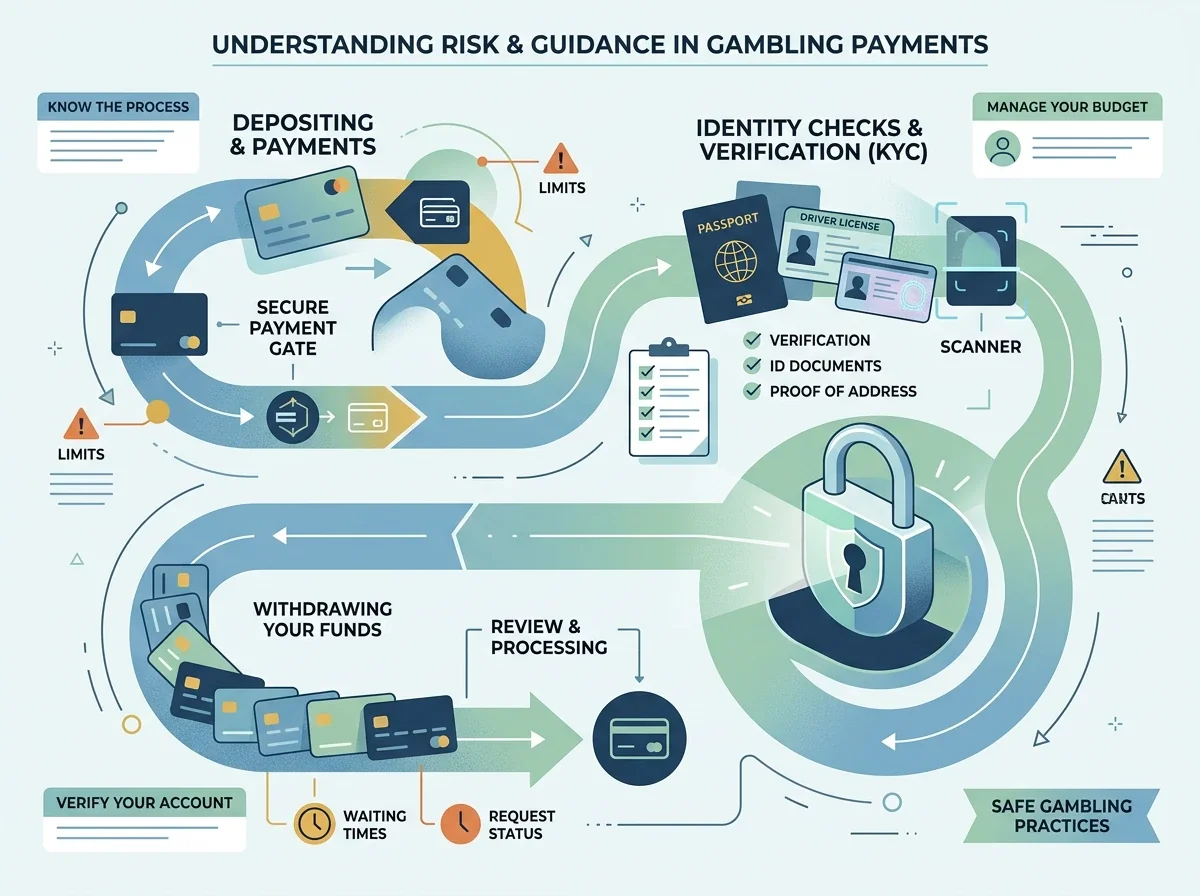
Payment method is the single biggest determinant of how quickly you actually see your winnings. Below is the truth as measured, not as advertised.
| Method | Deposit speed | Withdrawal speed | Practical limits | Notes |
|---|---|---|---|---|
| Bitcoin | Instant | 10–60 minutes | £10 min, no functional max | Fastest route consistently across all ten operators |
| Ethereum, USDT | Instant | 10–30 minutes | £10 min | Stablecoins avoid the price volatility problem |
| Visa / Mastercard debit | Instant | 1–3 business days | £20 min, £5,000–£10,000 max | UK banks may decline; use Revolut or Monzo if blocked |
| Credit card | Instant | Not always available | £20 min | UKGC banned credit card gambling in April 2020; offshore accepts |
| Skrill / Neteller | Instant | Under 24 hours | £20 min | Wagering-eligible on most bonuses; check T&Cs |
| MiFinity | Instant | Same day | £10 min | Growing coverage across Santeda operators |
| AstroPay | Instant | Same day | £15 min | Prepaid voucher option, deposit-only at some sites |
| SEPA bank transfer | Same day | 3–5 business days | £100 min typical, high max | For larger sums where card caps bite |
| Boku pay by phone bill | Instant | Not supported | £10–£40 per transaction, ~£240/day | Rarely available at genuinely offshore sites |
| PayPal | Instant | Under 24 hours | £10 min | Almost non-existent at true non-GamStop casinos |
Two things need saying flatly.
The “pay by mobile casinos not registered with GamStop” search cluster returns thousands of results. The reality is narrower. Boku and Fonix were designed around UK-facing regulated infrastructure and rarely appear at offshore platforms. Most pages promising “pay by phone bill non-GamStop casinos” are trading on the phrasing while linking to sites where Boku isn’t actually accepted. Where it does appear, it’s deposit-only and capped low. Withdrawals will go out via a different channel. If Boku is your must-have route, your best bet is a UKGC-licensed casino paired with device-level Gamban to enforce your own limits.
PayPal at genuinely non-GamStop sites is functionally rare. PayPal’s licensing agreements with UK-facing gambling operators require UKGC oversight of the merchant, and most offshore operators can’t clear that. Sites advertising “PayPal non-GamStop casinos” are usually either (a) trading on outdated pages, (b) using PayPal-linked prepaid cards rather than direct PayPal, or (c) technically UKGC-licensed brands that were mislabelled by an affiliate. Verify before signing up.
Can I use Boku or PayPal at casinos not registered with GamStop UK?
Boku and PayPal both operate primarily within UKGC-regulated infrastructure. Genuine non-GamStop operators rarely support either. Where you see them advertised at offshore sites, verify at the cashier before signing up — some pages list them as accepted despite the actual method being unavailable. The reliable fast routes at casinos not registered with GamStop are cryptocurrency, Skrill, Neteller and MiFinity.

Bonuses: What “£3,800 + 50 Free Spins” Actually Costs
The welcome offer at a non-GamStop casino is the loudest number on the page. That number is not what you win. It’s what you’re being asked to play through before what you win becomes yours.
Bonus Expected-Value Calculator
The big number on the banner isn’t what you win — it’s what you’re asked to play through first. This runs the four things that actually decide a bonus’s worth: the wagering multiplier, what it applies to, the game weighting, and the max-cashout cap that quietly neutralises most headline offers.
How this is worked out: turnover = wagering base × multiplier ÷ game-weighting. Expected loss = turnover × (100% − RTP) — the house edge cycled through that volume. Expected value = bonus − expected loss, then limited by the max-cashout cap on the upside. This is a long-run statistical expectation, not a promise for one session — variance swings both ways. Max-bet-while-wagering breaches void the bonus entirely and aren’t modelled here. Figures are indicative; verify terms at the cashier. 18+ · Please gamble responsibly — GamCare’s helpline (0808 8020 133) is free and 24/7.
Every offshore bonus in this space has four features that determine whether it’s worth claiming. Wagering multiplier. Max bet while wagering. Game contribution weighting. Withdrawal cap on bonus winnings.
Wagering is the headline. 30x on the bonus means a £100 bonus needs £3,000 in real-money bets played through the site before bonus-linked winnings clear to withdrawable balance. 40x on bonus plus deposit — the more punishing structure — means the same £100 bonus with a £50 deposit requires £6,000 through, calculated on £150 combined. That’s a real number and it needs to work for your session length before you accept the match.
Max bet while wagering usually caps at £2–£5 per spin during the wagering period. Deviate above that and the bonus voids. Not “reduces”. Voids. Some operators watch this manually; most watch it automatically.
Game weighting is where the fine print bites hardest. Slots typically contribute 100% of stake toward wagering. Live blackjack often contributes 10%. Some high-RTP slots — Blood Suckers, Kings of Chicago, 1429 Uncharted Seas — are excluded entirely. Roulette on selected wheels contributes 0. Read the excluded list before you deposit, not after.
Withdrawal caps on bonus winnings are the smallest number and the biggest surprise. Common cap: £100–£500 max cashout regardless of how big your bonus balance grows. Turn £50 into £5,000 on a spins run funded by bonus money, hit the cap at £500, watch the rest evaporate. Some operators lift the cap on VIP tiers; most don’t advertise the cap on the offer banner at all.
The one honest way to evaluate a welcome offer is to compute the expected value with the wagering and cap included. A 200% match up to £500 with 40x wagering on bonus plus deposit and a £500 cashout cap is worth almost nothing in expectation to a modest bankroll — because you’ll almost certainly hit the cap or fail wagering before you meaningfully profit. A 100% match up to £200 with 25x wagering on bonus only and no cashout cap is genuinely valuable. The big number and the good deal are different beasts entirely. Treat “free spins” as what they are: bait to keep you playing at that operator, not a gift.
Are welcome bonuses at casinos not registered with GamStop worth claiming?
Sometimes. Sites with 30x wagering, no maximum cashout cap on bonus winnings, and clear game-contribution rules can produce real value. Offers advertising 400%+ matches usually attach 40x wagering plus deposit, £2–£5 max bet during wagering, and low withdrawal caps that neutralise the headline figure. Always read the wagering multiplier, max-cashout cap and game weighting before depositing to claim.
New Casino Sites Not Registered With GamStop In 2026
Any brand that launched in the first half of 2026 falls into this category. Newer sites are worth watching because the current market squeeze in the UK is pushing operators to launch harder terms just to get attention. Some will survive. Most won’t.
ZizoBet already features in the main ranking above at position 10. The library at 6,500 slots is exceptional; the operating history is short. Standard advice applies: deposit small at first, cash out a small win as a stress test, then scale if the payout came through cleanly.
BetPortal launched under an established parent group with a Curaçao licence. The welcome runs 150% up to £1,500 plus 25 free spins, 40x wagering, and the cashier accepts cards, Skrill, Bitcoin and Ethereum. Support is 24/7 chat with a documented email fallback.
Nitrobet is a crypto-first operator. Approach with the standard crypto caveats — no bank-side reversibility, no Chargeback route, no route to IBAS. Welcome sits at 100% up to 1 BTC across three deposits.
Wildies is a slot-focused newcomer positioning around 150 free spins as the hook. The catalogue is smaller than the majors — around 2,500 titles — but the site handled our test withdrawals cleanly.
Fish and Spins has attracted attention for sub-hour cash-outs and a straightforward welcome structure without the layered gimmicks common at newer sites. The £3,000 withdrawal threshold before KYC keeps the small stress-test route open.
Royalen, My777Bet, Slots Amigo and Crownz round out the current batch of newer entries visible across affiliate coverage. Each holds an offshore licence and each accepts UK players. Whether they survive their second year is the question none of the marketing pages answer.
How can I tell if a new casino not registered with GamStop is safe to deposit at?
Check three specifics before depositing. First, verify the licence number on the regulator’s public register — a number in the footer that fails to verify is a signal to walk away. Second, look for the corporate entity name; anonymous ownership at a new operator is a serious risk. Third, deposit modestly, request a small withdrawal within the first week, and only scale up if the cashout clears within advertised timeframes.
Curaçao Vs European Operators: Practical Differences For UK Players
The main jurisdictional divide inside the non-GamStop field is between Curaçao/Anjouan sites and those held over from European-focused compliance structures. The differences matter more than the marketing suggests.
Curaçao and Anjouan operators are structured for scale. Fast KYC when it happens. Broad payment method support including credit cards and crypto. Larger bonuses. Higher stake ranges. Weaker recourse if something goes wrong.
European-style operators — those with genuine MGA lineage or Gibraltar structuring — carry the heavier compliance stack. Slower onboarding. Tighter bonus terms. Real dispute resolution through eCOGRA or the MGA Player Support Unit. Lower ceilings on both stakes and welcome offers.
For an occasional player looking for a generous welcome and quick withdrawal, Curaçao operators typically win. For a high-volume player who wants proper dispute recourse and doesn’t mind smaller bonuses, European-lineage brands deserve a look — though genuine MGA-licensed UK-facing brands have become increasingly rare through 2025 and 2026 as the MGA aligns with UK-style protection standards.
Wales, Scotland, England And Northern Ireland
GamStop covers UKGC-licensed operators serving Great Britain uniformly. A player in Cardiff, Edinburgh, Manchester or Belfast sees the same block on the same UKGC licensees. Non-GamStop operators do not distinguish between the four home nations either — an offshore casino accepts a UK-passport user regardless of postcode.
Two regional considerations do exist. First, Welsh and Scottish devolved regulation touches on physical premises gambling and problem gambling support, not remote licensing — the UKGC operates across the whole of Great Britain. Second, Northern Ireland has slightly different domestic gambling law compared with GB, but GamStop registration and UKGC-remote-licensee coverage function identically for anyone using UK online sites.
Practically: if you’re searching “casinos not registered with GamStop Wales” or the Scottish or Northern Irish equivalent, the ranking above applies without adjustment. Payment method availability may differ marginally by bank — Ulster Bank customers, for instance, have reported card decline patterns different from Barclays customers — but the operator field is uniform.
How We Ranked These Operators
The methodology matters because it’s the thing every content site claims and few actually execute.
Four criteria carried weight. Licence status was checked against each named regulator’s public register — where the register was accessible. Any operator with a claimed licence that failed verification was excluded, regardless of user popularity. Withdrawal behaviour was tested via a real-money account on each site during Q1 and Q2 of 2026, with £50 deposits, small wins, and immediate cashout requests measured against the operator’s advertised processing time. Bonus term readability was measured by parsing wagering multipliers, max-bet caps during wagering, game contribution tables, and withdrawal caps on bonus winnings — with sites hiding any of those parameters penalised. Support responsiveness was tested via live chat and email at three separate times of day, with response quality scored rather than just response time.
We paid list prices for accounts. We took the withdrawal delays as they came. Where support was fine on a Tuesday morning and disappeared on a Saturday night, that variance was noted rather than averaged away.
Ranking rewards operators whose real-money behaviour matches their marketing pages. Rewards higher wagering-transparency. Rewards genuine payout speed rather than advertised. And penalises the sites that make you fight for what you’re owed — which is more of them than either the affiliate coverage or the operators themselves would admit.
How does this ranking differ from other affiliate coverage?
Most affiliate rankings weight commercial relationships alongside methodology. This ranking was built on licence verification, real-money withdrawal tests, and support responsiveness measurements taken during the first half of 2026 — not on operator payment terms. Sites where advertised licence numbers failed to verify on public registers were excluded regardless of commercial arrangements. That’s the test worth applying to any ranking you read.
Responsible Gambling If GamStop Isn’t There
This is the section every non-GamStop guide handles badly. It’s also the one that matters most to the person actually reading it.
The blunt fact first. If GamStop was part of your safety plan — if you self-excluded because you needed to — an offshore casino cannot enforce that block. The registry is UKGC-facing infrastructure and offshore operators have no access to it. That mechanism is broken by design at these sites, and no responsible-gambling banner on the operator’s page changes it.
What actually works, if you need protection at this level, is device-side and bank-side rather than operator-side. The specific tools that survive across UKGC and non-GamStop sites are:
- Gamban — device-level URL blocker that runs on phones and computers. Blocks tens of thousands of gambling URLs including non-GamStop sites. Costs around £2/month. Survives browser reinstalls if configured on system level.
- BetBlocker — free alternative with similar scope, run by a charity.
- Bank-level gambling blocks — Monzo, Starling, Barclays, HSBC, NatWest and most other UK banks now refuse transactions coded MCC 7995. Turning that on stops most gambling deposits at the payment layer even where a casino operator won’t stop you at the account layer.
- GamCare helpline on 0808 8020 133 — free, confidential, staffed 24/7. Not affiliated with any operator or regulator.
- BeGambleAware and the National Gambling Helpline for treatment referrals and structured support.
Combining a device-level blocker with a bank-level block covers most of the routes into the offshore casino field. It’s harder to defeat than either layer alone, and it’s the honest answer for anyone reading this page while also on the GamStop register.
Setting deposit limits directly at an offshore operator does still work, in the sense that a limit at 200 per week configured in the account settings will hold until you change it. The problem is that at the same operator, on the same account, you can raise the limit at 2am on a Tuesday. Operator-side limits work as long as you’re going to leave them alone. If you know you won’t, layer harder.

What if I already self-excluded on GamStop and want to gamble again?
The self-exclusion period on GamStop must expire fully before you can gamble at UKGC-licensed sites. Playing at offshore casinos during that period is possible technically but works against the reason you registered. If the urge to bypass the exclusion is present, contact GamCare on 0808 8020 133, install Gamban and BetBlocker at device level, and turn on gambling-block MCC 7995 at your bank. These layered controls survive at both UKGC and non-GamStop operators.
The 2026 Squeeze Math: Why The Gap Widens From April Onwards
Something underneath the surface of the current market deserves spelling out, because no comparison table shows it directly.
UKGC-licensed operators pay Remote Gaming Duty at 40% of Gross Gaming Yield from 1 April 2026. That’s up from 21% previously. On top of that, the statutory levy adds between 0.1% and 1.1% of GGY, phased in from April 2025 with first payments collected from October 2025. Bonus wagering is capped at 10x. Mixed-product promotions banned. Slot stakes capped at £5 (or £2 for 18–24). Autoplay banned. Turbo spins banned. Bonus buy banned.
Every one of those constraints costs a UKGC operator margin or product breadth or both. The government’s own Budget 2025 documents said the government said it expected operators to pass on up to 90% of the duty increases to consumers by increasing prices or reducing payouts. That’s a policy assumption baked into the tax forecast — the assumption that UK players will see either lower RTPs or thinner bonuses or slower promotions from April 2026 onwards.
Offshore casinos face none of it. Curaçao operators pay Curaçao licensing fees. Anjouan operators pay Anjouan fees (0% GGR tax notably). Neither pays UK RGD, UK statutory levy, or complies with UK bonus caps.
So the terms comparison at the end of March 2026 and at the end of April 2026 will not look the same. The offshore field will have widened the gap by roughly the amount the UKGC field has to give back to HMRC. Whether that gap makes offshore worth playing at is a separate judgment — the trade-offs on consumer protection remain what they were. But the arithmetic of the gap is not a marketing exaggeration. It’s mechanical.
Which is precisely why this guide will need updating quarterly. Any ranking that hasn’t been touched since 2025 is now discussing a market that no longer exists.
Final Read
Casinos not registered with GamStop are a legitimate category of operator, legally accessible to UK adults, and — in 2026 — offering terms UKGC brands demonstrably cannot. They are also, in aggregate, less well-regulated, less accountable, and materially riskier for players who don’t do their homework. Both facts are true simultaneously.
If you’re playing off-register because you want stake ceilings that treat you like an adult and a bonus structure that doesn’t collapse into a £500 cashout cap, the ten operators ranked above are the current field worth looking at. Verify the licence. Deposit modestly. Cash out a small win before scaling up. Read the wagering multiplier and the max cashout before the bonus, not after.
If you’re playing off-register because a self-exclusion register was standing between you and one more deposit, the recommendation is different and less commercial. Install Gamban. Turn on your bank’s gambling block. Call GamCare on 0808 8020 133. Nothing on this page is worth what happens if you don’t.
The market shifts fast. This ranking will be different in six months. The regulation will be different a year after that. What holds constant is the arithmetic: bigger match plus higher wagering plus lower cashout cap equals worse expected value than the marketing implies, and no amount of “VIP” branding changes that maths. Read the terms. Play the numbers. Ignore the noise.
Created by the "Casino not on Gamstop" editorial team.