
Crazy Time Live Casino UK: What to Check
 Available in GB
Table of Contents
- Crazy Time in a Live Casino: What This Guide Can—and Cannot—Verify
- Recommended online casinos
- Live Casino Games and the UK Tables Around Them
- Crazy Time Casinos: Check the Licence Before You Deposit
- Where to Play—Without Trusting a Search Result on Its Own
- Choosing a Casino for Crazy Time: Look Past the “Best” Label
- A Strategy That Starts With Your Limits, Not a Betting System
- Free Play and Free Spins: Check What the Offer Actually Means
- Bonuses and Deposits: Read the Conditions Before You Click
- Rules and Stakes: Don’t Assume Slot Limits Apply to Every Game
- Demo Mode: What to Confirm Before You Treat It as Practice
A practical guide to verifying casino listings, access conditions and the terms attached to play and promotions.
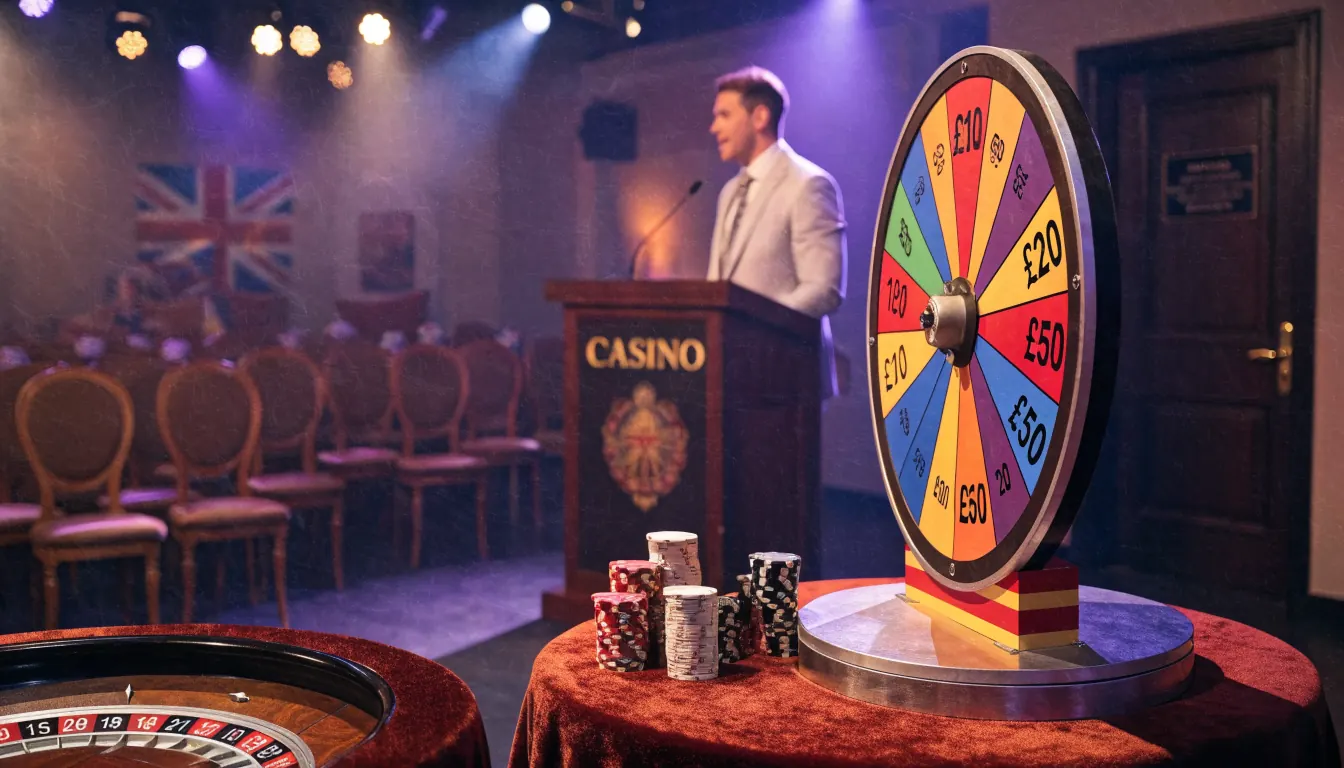
Crazy Time in a Live Casino: What This Guide Can—and Cannot—Verify
If you are looking for Crazy Time in a UK live casino, it helps to separate the name of a game from claims made around it. A casino page, advert or search result might use the same title while offering very little that lets you judge what you would actually be accessing. I have learned not to treat a confident label as proof. It is a starting point, not a reason to deposit.
This guide is about how to approach Crazy Time in a UK casino setting: what to check, what not to assume and how to make sense of the surrounding live-casino offer. It is not a promise that a particular operator carries the game, or that every page using its name is describing the same current product. Availability can depend on the casino, and a listing can change. Check the operator’s own game catalogue rather than relying on an old mention elsewhere.
The “live” label also deserves a little care. It tells you how a casino presents the experience, but it does not answer every practical question about access, play conditions or account requirements. Those details belong to the operator’s current information. Read the relevant page before you act, and pause if the description leaves you guessing. I would rather lose a minute checking than discover later that I misunderstood what I was signing up for.
The year in the page title should not be read as a claim that the game has had a particular update, or that its UK availability is new for 2026. A date attached to a guide can make old or generic copy look more current than it is. Look for information that is clearly tied to the casino you are considering, and be wary of wording that makes a broad promise without showing what it means in practice.
JetX Casino Game in the UK: Labels, Demo and Risk
I am also not going to dress up the game name as a rules explanation. A title alone does not tell you how a game works, what choices are available or what any on-screen terms mean. If you reach a game page, take its instructions and displayed conditions as the place to understand that specific offering. If anything remains unclear, do not guess your way through a real-money session. That is how small assumptions become expensive ones.
There is a wider UK context to keep in view: online gambling is legal for adults at sites holding a UK Gambling Commission licence. That does not tell you whether a particular casino has Crazy Time, nor does it confirm the details of a game listing. The two checks answer different questions. Keep them separate.
The sensible expectation is modest: use this guide to assess the setting, then verify the details with the casino before playing. No confident headline can replace that check. And whatever you choose, only gamble what you can afford to lose.
Recommended online casinos
- NightWinBonus: £900 + 400 free spins · Payout speed: 1-3 business days
- SpinFormulaBonus: 550% Up To £15,000 + 550 FS · Payout speed: 1-3 business days
- AmunbetBonus: Join now and get 450% up to 2,700 GBP + 450 FS · Payout speed: 1-3 business days
- SlotoSportBonus: 500% up to £ 10 200+ 777 FS · Payout speed: 1-3 business days
- NightLuckBonus: Welcome Pack + 805% Up To 6400€ + 280 FS · Payout speed: 1-3 business days
- BritsinoBonus: Welcome Package – Get your £2,200 + 2,000 FS · Payout speed: 1-3 business days
- JetsetspinsBonus: 200% Bonus + 100 Free Spins + Free Royal Wheel · Payout speed: 1-3 business days
Live Casino Games and the UK Tables Around Them
A live casino is less a single kind of game than a format: you watch a real table or studio through a video stream and make decisions through the casino interface. The table may be built around cards, a wheel or a presenter-led show. That variety matters when you come across Crazy Time. Its name can sit beside familiar casino titles, but that does not make it the same sort of experience as a conventional card table.
Deal or No Deal Casino UK: Licence and Slots
For a UK player browsing live games, the familiar starting points are often blackjack and roulette. Poker variants may appear too. The pace and feel differ: a card game asks you to follow decisions around a table, while roulette centres on a wheel and its result. A show-style title has a different presentation again, with a presenter and a more theatrical studio setup. Those broad categories help you understand what you are opening, without assuming that every casino carries every game.
Grosvenor offers a useful piece of UK history here. It first unveiled live casino games in 2013, with card and casino titles that included Blackjack, Texas Hold’em and Roulette. That gives a concrete example of how live tables became part of the local casino landscape: the format was not limited to one familiar game or one style of play. The catalogue could bring several kinds of table experience under one roof.
Blackjack A card game where you follow decisions around a table.
Roulette A game that centres on a wheel and its result.
Show-style A theatrical studio setup with a presenter.
The term “live” can make everything sound interchangeable. It isn’t. A dealer-led card table, a roulette wheel and a presenter-led game may all use streaming video, but their layouts, pace and decisions can feel quite different. I’ve found it easier to choose by the kind of session I actually want than by a colourful thumbnail. If you want a recognisable card format, look for one; if you want a more show-like presentation, look for that instead. The label alone tells you very little.
Crazy Time belongs in that broader conversation as a named live-casino game, not as proof that a particular UK casino has it. When you see it mentioned alongside live tables, treat that as a clue about the kind of catalogue being discussed, not confirmation of availability at a specific operator. A game can be prominent in a general conversation while still being absent from the casino you have open. Annoying, but worth checking.
There is also a practical difference between browsing a live lobby and understanding the table itself. The lobby is a shop window: categories and tiles help you scan what is offered. They do not tell you everything about the game’s pace, presentation or terms. I used to click on whatever looked lively and assume I would work the rest out as I went. That is a fine way to lose track of what you meant to play. Better to pause, read the game information and decide whether the format suits you before putting money behind it.
Mines Casino Game in the UK: How It Works
Live streaming can make a casino feel more immediate than a standard digital interface. That feeling is part of the appeal, but it is not evidence that a game is more predictable, more social or better value. A presenter may make a session feel like entertainment; the wager is still real money when you play for cash. I keep those two thoughts separate now. The show is the presentation. The spending is mine.
So, when you look at Crazy Time in a UK live-casino setting, place it beside the wider range of streamed table and studio experiences rather than treating “live casino” as one uniform product. Familiar card games and roulette provide useful context; Grosvenor’s early live-casino launch shows that the local offering has included varied formats for years. What matters to you is whether the actual game and its presentation suit your preferences, not how exciting the tile looks. And only gamble what you can afford to lose.
Crazy Time Casinos: Check the Licence Before You Deposit
When you’re looking at a casino that advertises Crazy Time, it’s tempting to start with the game page. I’ve made that mistake: a polished site can make the important checks feel like paperwork for later. I now do them in the other order. Before considering a casino’s catalogue, I check whether the business is authorised to offer remote gambling to people in Great Britain.
The UK Gambling Commission oversees gambling in the UK, including online casino activity. For remote gambling offered to people in Great Britain, the operator needs the relevant Commission licence even if its equipment or business operations are based elsewhere. The Commission is the sole regulator for commercial gambling in Great Britain. A foreign address, then, does not remove the requirement to hold the appropriate British licence.
- Check the legal operator name and licence number.
- Look up details on the UK Gambling Commission public register.
- Verify the connection between the brand and the registered business.
- Rely on a familiar brand name or an official-looking seal.
- Assume a badge in a footer is a sufficient check.
- Ignore discrepancies between the site and the register.
That distinction matters when you see claims such as “licensed”, “regulated” or “trusted”. Those are marketing words until you can connect them to the business that runs the site and confirm the licence on the Commission’s public register. A badge in a footer is not the check. A vague reference to a licence, without a verifiable record, is not the check either.
Check the business, not just the brand
Start with the casino’s legal operator name and licence number, if the site provides one. Then look up the details on the UK Gambling Commission’s public register. Check that the record relates to the business behind the casino, rather than relying on a familiar brand name or an image that appears to be an official seal.
A casino brand and the company operating it are not necessarily named alike. That does not automatically mean anything is wrong, but you should be able to follow the connection from the site’s terms or licensing information to the registered business. If the operator name on the site and the register do not appear to match, pause and resolve the discrepancy before creating an account or depositing.
Pay attention to whether the record supports the activity being offered, rather than simply showing that a company has some connection to gambling. A licence held by a business does not make every site using its name authorised. Check the specific operator and the relevant details for the casino you intend to use. If you cannot establish that link from the register and the operator’s own information, don’t treat the licence claim as confirmed.
The Commission issues operating licences to businesses and personal licences to individuals working in relevant roles in Great Britain. For a player assessing an online casino, the business’s operating authorisation is the central point. A person’s licence, a supplier’s credentials, or a claim about a partner should not be mistaken for proof that the casino operator itself is licensed.
What to do when details do not line up
If you find a register entry, compare its business identity with the casino’s legal information. Check the domain and brand details where available, and look for a clear explanation if the site is run under a different company name. Take care with lookalike names: a similar spelling is not evidence that two businesses are connected.
If the operator’s page gives no usable company details, the licence number cannot be found, or the register points to a different business without a convincing explanation, stop there. Don’t let a game logo, an advert or a confident support reply substitute for a register check. Ask the operator to clarify the identity and authorisation, then verify the answer independently. If the explanation remains unclear, choose not to deposit.
This is a useful habit even when a site looks familiar. I used to read a licensing badge as reassurance and move on. It isn’t reassurance until the record checks out. That small pause can prevent a much bigger headache.
A licensing check is about more than the game you came to play. It is a way to establish whether the operator is within the British regulatory system before you hand over account or payment details. It also gives you a concrete business name to refer to if you need to raise a concern later. Keep a note of the operator identity and the register entry you checked; don’t rely on remembering a logo.
Attention A site’s claim of being based overseas does not remove the requirement for a relevant UK Gambling Commission licence.
A site’s claims about being based overseas do not change the requirement for a relevant Commission licence when it offers remote gambling to Great Britain consumers. Nor should the word “international” persuade you that a foreign authorisation replaces the British one. For this market, check the UK Gambling Commission register directly.
Only proceed once the operator’s identity and licence details make sense together. And, whatever casino you consider, only gamble what you can afford to lose.
Where to Play—Without Trusting a Search Result on Its Own
A page can mention Crazy Time without the casino behind it actually offering the game. I’ve learned not to treat a game title in a headline, review or advert as proof that I can open it and play. Check the casino’s own site, then check that you have landed on the operator’s real domain rather than a lookalike or an affiliate page.
Once there, search the game catalogue for “Crazy Time”. If the site has a live-casino lobby, check there too; a general site search may not show every table or category. Read the result carefully. A page about the Crazy Time wheel is not necessarily a playable game, and a description of a live casino does not confirm that this particular title is in its lobby.
If you cannot find a clear listing, ask the operator through its own customer-support channel whether Crazy Time is currently available to customers in Great Britain. A direct answer is more useful than a third-party page that may be old or may refer to a different market. Keep the response, especially if it explains that access depends on location or account status. Don’t assume that an offer shown in a promotion will appear in your account.
Then check who is actually taking your account and wagers. The operator serving Great Britain consumers must hold the relevant Gambling Commission licence. Use the Commission’s public register to check the licence number and that the details correspond to the operator and domain you are using. A familiar brand name alone is not enough if the site’s legal operator or web address differs from what you expected.
That distinction matters. A search result can point to an intermediary, an outdated page or a site using a similar name. Before you register, compare the domain in your browser with the operator details shown on the casino site and the Commission register. If the details do not line up, pause and resolve that mismatch rather than relying on a logo or a confident-sounding claim.
Chicken Road game at UK casinos: what to check
When the game appears in the lobby, check that its title leads to the actual table interface, not just a rules page or promotional description. If the casino’s catalogue has filters, clear them and search again; a title can be tucked under a live-game category rather than the general list. Still no listing? Don’t create an account on the assumption it will appear later. Ask first.
I’d also avoid treating “top” or “best” labels in a result as evidence. They tell you how a page presents itself, not whether the casino offers Crazy Time or is authorised for Great Britain. Confirm those two points independently: one on the operator’s current game catalogue, the other on the regulator’s register.
Only continue if both checks make sense and the terms on the operator’s own site match what you have been told. If anything feels evasive—an unclear company name, a domain mismatch, or no straight answer about the game—walk away. There are other things to do with an evening. And only gamble what you can afford to lose.
Choosing a Casino for Crazy Time: Look Past the “Best” Label
“Best” sounds like a verdict, but it often tells you very little about the experience you will actually get. I have learned not to treat a confident label as proof. For a UK player comparing casinos for Crazy Time, a better approach is to check practical details one by one—and be willing to leave a site if they do not add up.
Start with the catalogue. Look for Crazy Time in the casino’s own games section, rather than relying on a promotional page or a third-party list. If the game is not visible, use the site’s search or contact its customer support and ask whether it is currently available to your account. A title in an advert is not the same thing as a game you can open. Nor does a casino’s general claim to offer live games confirm that it carries this particular one.
Then look at how the casino treats your account. UK-licensed operators must prompt new customers to set a financial limit before their first deposit and make account-level limit controls accessible. They must also offer responsible-gambling tools, including self-exclusion. These are not decorative extras. Check that the controls are easy to find and understand before putting money in; if you have to hunt through several pages to work out how to limit or pause your play, that is useful information about the experience.
Crash Casino Games in the UK: How They Work
Age checks matter too: an operator must verify your age before allowing a deposit. A sign-up flow that makes the process unclear is a reason to slow down, not a reason to rush through it. And before depositing, verify the operator’s licence number on the Gambling Commission’s public register. That check belongs ahead of any judgement about game choice or presentation.
I would also judge the site by how clearly it explains ordinary account matters. Can you find the terms, customer-support route and complaints process? UKGC licensees must provide an internal complaints process and access to an approved Alternative Dispute Resolution service. You do not need to expect a dispute; you do want to know where the route is before you need it. Clear information is more useful than polished slogans.
Do not let the word “results” do too much work for you, either. A page presenting Crazy Time results, or a record described as a casino result, does not by itself tell you whether an operator suits you. It is not a substitute for checking the actual game catalogue, the account tools or the operator’s information. I would not choose a casino based on a results page or a claim that it has the best strategy. A casino’s presentation cannot make future outcomes predictable.
The same goes for a “best Crazy Time casino UK” badge. Unless a comparison explains what it assessed and lets you verify those points yourself, the ranking is just someone else’s preference dressed up as a fact. You can make your own shortlist: confirm the game is present, inspect account controls and read how the operator handles customer concerns. That is less flashy. Better grounded.
There is no need to force a winner if the checks leave you unsure. Close the page and compare another operator; the game will not become a better choice because a site calls itself the best. Set your own limit before you start, and only gamble what you can afford to lose.
A Strategy That Starts With Your Limits, Not a Betting System
“Strategy” sounds reassuring when you are deciding whether to play. I used to treat a plan for changing my wager as if it could make a session predictable. It could not. A money plan is less exciting, but it is something you can actually control.
Before opening a game, decide what you can afford to lose without affecting bills, food, travel or other commitments. Only gamble what you can afford to lose. That is not a clever system; it is the line between entertainment and money you need back. If losing your planned amount would make you chase it, make the amount smaller or do not start.
Casino Dice Games in the UK: Odds and Rules
Set a spending limit before you deposit, and use the casino’s account controls to put that boundary into practice. Remote operators must prompt new customers to set a financial limit before their first deposit and provide accessible account-level limit controls. Choose a figure you can live with, rather than one that feels comfortable only while you are winning. If you reach it, stop. Do not raise it mid-session to give yourself another chance.
I find it helps to make a session plan that is about decisions, not outcomes. Decide when you will stop, what would make you take a break, and whether you are willing to walk away after a win as well as a loss. Keep the plan simple enough to follow when you are excited or irritated. That is when complicated rules tend to disappear.
A tracker can help you record what you spent and how long you played, if you choose to keep one. It is a diary, not a forecast. A record of earlier results cannot tell you what will happen next, and a pattern that looks persuasive on a screen is not a reliable reason to increase your wager. The same goes for a game history: it can show what has already happened, not turn past outcomes into a promise about the next one.
I would not build a Crazy Time casino strategy around chasing a particular result, doubling after a loss or assuming a run is “due” to change. Those ideas can make a losing session more expensive without giving you control over its outcome. If your plan depends on winning back money you have already lost, it is no longer a limit. It is chasing.
Keep an eye on your state of mind, too. If you are tired, upset, distracted or trying to recover money, leave the game for another time. Taking a break is a practical decision, not a failure. If you find that your limits are difficult to keep, use the casino’s responsible gambling tools, including self-exclusion, or seek support from GamCare, BeGambleAware or Gamblers Anonymous.
The useful plan is the one you can follow before the session gets emotional: set your limit, stick to it, and stop when it is reached. No betting system needed.
Free Play and Free Spins: Check What the Offer Actually Means
“Free” can describe two different things: a demo that lets you try a game without staking your own money, or a promotion attached to a casino account. They are not interchangeable. A demo is about access to the game; an offer is about the terms under which the casino gives you something to use.
Understanding ‘Free’ Offers
‘Free’ can mean a demo for non-stakes practice or a promotion attached to an account. Check the specific wording to see if a deposit or account is required.
I’ve clicked offers that sounded straightforward, then found the important conditions tucked away elsewhere. So if you see Crazy Time described as free, check what the wording actually promises. Is the game available to play without a deposit, or does “free” refer to a promotion that requires an account or another action? Do not assume that free spins are offered for this game simply because a page uses the phrase.
For any promotion, read the casino’s terms before you opt in. Check which games are included, whether the offer applies to Crazy Time, and what restrictions govern its use or withdrawal. If the terms are vague, hard to find or do not name the game, treat that as a reason to pause rather than filling in the gaps yourself.
A “free spin” is not necessarily the same as unrestricted free play. The promotion may come with conditions, and the label alone does not tell you whether winnings can be withdrawn or whether the game is eligible. That detail belongs in the offer terms, not in the headline.
For a demo, look for a clear indication that you are not wagering real money. Do not mistake a promotional page, preview or sign-up offer for a playable version. Availability can vary, so confirm what the casino provides before making an account decision. No guesswork.
Even when a demo is available, it should not be treated as proof that real-money play will work the same way. And a promotion should not be treated as a reason to deposit if you would not otherwise choose to. I’ve made that mistake: the offer became the reason for the decision, instead of a detail to assess.
If the wording leaves you unsure whether you are looking at a demo or an account promotion, step back and check the relevant terms. “Free” is a label. The conditions tell you what it means.
Bonuses and Deposits: Read the Conditions Before You Click
A “welcome bonus” can sound like extra money with no catch. I’ve learned to treat the headline as the least useful part. Before accepting a Crazy Time casino bonus, open the full terms and check what the offer applies to, which games count, how any winnings can be withdrawn, and whether the promotion has conditions that affect a cash-out. If those points are unclear, pause rather than assuming the bonus works on the game you want.
The same applies to a deposit bonus. Check whether you must opt in, which deposit methods qualify, and what happens if you decline or later cancel the offer. A casino’s own terms should explain the conditions; a banner or short promotional summary is not a substitute. “No deposit” does not mean there are no rules. Read the offer’s terms before relying on it, and do not treat a promotion as a reason to put money in.
Think about the payment route separately from the offer. UK-licensed remote gambling operators cannot accept credit-card payments for gambling. That restriction also covers credit-card funds routed through a money service business, and operators cannot accept wallet payments when the wallet allows credit-card funds to be used for gambling. If the payment method’s funding source is uncertain, check with the provider and casino before trying to deposit. Don’t work around the restriction.
Deposit Safety
UK-licensed operators cannot accept credit-card payments for gambling. Always verify the funding source before attempting to deposit.
A licensed casino must verify your age before allowing a deposit. It must also prompt new customers to set a financial limit before their first deposit and make account-level limit controls accessible. I would check those controls while reviewing the account, not after a promotion has made a deposit feel urgent.
Searches for a Crazy Time casino no-deposit bonus or a casino not on GamStop can lead to offers whose status and terms need careful scrutiny. A label is not proof that a site is suitable for Great Britain. Keep the deposit decision separate from the bonus pitch, and do not assume a payout is available until you have read the applicable conditions.
I’ve clicked first and read later. Bad order. Only gamble what you can afford to lose.
Rules and Stakes: Don’t Assume Slot Limits Apply to Every Game
The word “casino” in Crazy Time’s name does not tell you how the game is classified, what its rules are or which stake limits apply. I’d avoid treating its name, format or any talk of multipliers as proof that it is an online slot. Check the game information and the operator’s terms instead; a title is not a rulebook.
A specialist review reports that Great Britain’s online-slot stake caps are £2 for adults aged 18 to 24 and £5 for adults aged 25 and over, measured per game cycle. The same type of review says those slot limits do not cover roulette or blackjack. That distinction matters, but it does not establish that Crazy Time is either a slot or one of those table games. Don’t transfer a limit from one category to another without confirming how the game is treated.
Nor should you read a claimed Crazy Time score or multiplier as a promise about what a wager can return. The rules and paytable shown for the specific game are what you need to inspect. If the casino’s description is unclear, pause before staking money and ask the operator to clarify the game’s classification and applicable limits.
Live Dream Catcher Casino UK: What to Check
I’ve learned not to fill gaps with assumptions just because a game looks familiar. A live presentation does not, on its own, tell you how the game is regulated or scored. Check the actual terms on the table you are considering, and make sure they match the game on screen. If you cannot tell what a round requires or how a result is settled, don’t wager until you can.
Those are separate checks. Keep them separate.
Demo Mode: What to Confirm Before You Treat It as Practice
A demo can sound like a simple way to get familiar with Crazy Time, but the label alone tells you very little. I’d first check whether the casino actually offers a demo of this specific game. A general free-play page, or a demo for another title, is not confirmation.
If you find one, read the terms on the casino’s own page before opening it. Check whether access is limited, whether you need an account, and whether the demo behaves differently from the real-money version. Don’t assume a practice screen uses the same conditions as a live table. If those details are unclear, treat the demo as a preview, not a reliable rehearsal.
Also check what the game itself is described as. A phrase such as “Crazy Time slot demo” can lead you to expect a slot, but a search label doesn’t establish the game’s format or rules. Use the casino’s information for the title you are considering, and don’t infer how it works from the word “demo”.
A demo may help you get used to the screen, but it cannot show what a real-money session will feel like. I’ve made the mistake of treating a low-pressure preview as proof I was ready to wager. It wasn’t. Keep your spending decision separate from any practice session, and only gamble what you can afford to lose.
If there is no clear demo information, don’t fill in the gaps yourself. Contact the casino or move on. A missing explanation is a reason to pause, not a promise that the feature is available.
What are the online slot stake limits in Great Britain?
The limit is £5 per game cycle for adults aged 25 and over, and £2 for adults aged 18 to 24. These limits do not apply to roulette or blackjack.
Are online casino games licensed and regulated?
Yes. The UK Gambling Commission regulates remote gambling offered to consumers in Great Britain, and operators serving them must hold the relevant licence.
Is LuckyPays licensed by the UK Gambling Commission?
The public Gambling Commission register dated 26 September 2026 does not identify a LuckyPays entry under its brand or stated domain, including luckypays.io.
Created by the "Casino not on Gamstop" editorial team.