
£3 Minimum Deposit Casinos in the UK: What to Check
 Available in GB
Table of Contents
- What a £3 minimum actually tells you
- A small deposit won’t make every slot affordable
- What changed for bonuses in 2026
- How a £3 deposit reaches your casino account
- Real-money play: check the cash-out threshold too
- Not on Gamstop? Verify the operator before you deposit
- PayPal and £3 deposits: check the cashier, not the headline
- Recommended online casinos
- What “three pounds” means for vouchers and fees
- A £3 cashier minimum doesn’t guarantee a £3 bonus deposit
- SMS billing and the limits of a tiny deposit
The advertised minimum may not apply to every payment route, account condition or bonus, so compare the cashier details before playing.
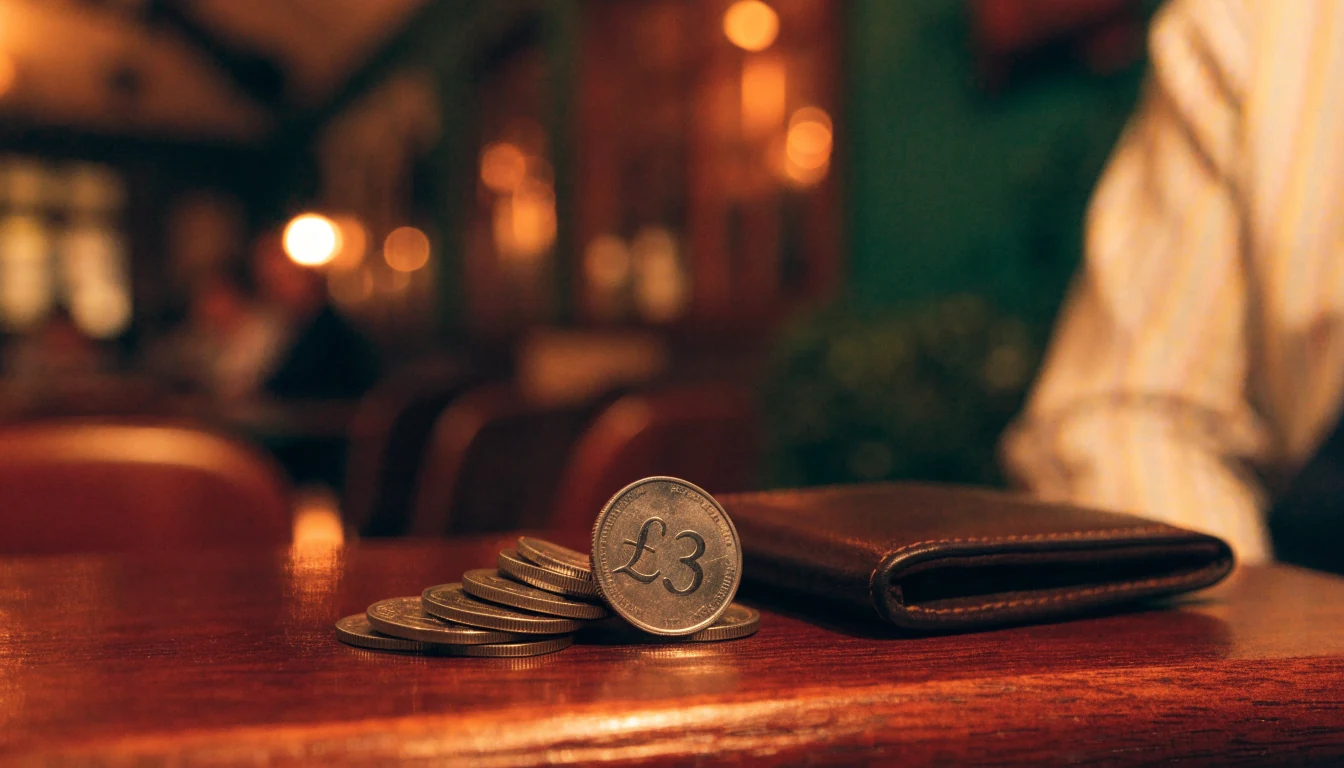
What a £3 minimum actually tells you
A £3 minimum deposit is a cashier threshold, not a promise that every account, payment route or offer works on the same terms. It tells you the smallest amount that a particular cashier will accept under the conditions shown there. That is useful, but it is a narrower claim than “this casino is cheap to use”. I used to read the headline figure as if it answered everything. It didn’t.
Some UK casinos accept a deposit of just £1, so £3 is not the lowest possible entry point. It sits above that rare tier, while still being a small amount to put into an account. The gap matters if your aim is simply to test the cashier or try a site with a limited balance. It matters less if the operator’s actual minimum for your chosen method is higher than the headline figure.
There is no single minimum shared by every UK casino. The operator sets its own cashier rules, and the amount can also depend on how you pay. A site may advertise a low starting figure without that figure applying to every route in its cashier. So treat the amount on the page as a starting clue, then read the amount shown for the method you intend to use before you commit.
That sounds obvious. It is easy to miss when an advert puts one figure in large type and leaves the conditions elsewhere. I have done it: I noticed the attractive number, formed a plan around it, then found that the option I wanted did not match the headline. No drama, just a needless detour.
For a sense of how uncommon the very lowest tier is, one specialist review reported checking six UK Gambling Commission-licensed casinos that accepted genuine £1 deposits. That is a snapshot of the operators it examined, not a permanent count of the whole market. In that review’s list, NetBet was the only UKGC-listed casino recorded with a £1 cashier minimum. The useful takeaway is not the name; it is that a £1 minimum is unusual, and lists can change. Check the current cashier rather than relying on an old comparison.
Non-UKGC Licensed Casinos: Rules and Risks
A £3 minimum can therefore be a practical middle ground: lower than the amount required at some cashiers, but not the rarest threshold available. It does not tell you whether the operator has a good range of games, whether its terms suit you, or whether you will want to deposit again. Those are separate decisions. The minimum is just the gate price.
When comparing low-entry options, look for the exact phrase “minimum deposit” and confirm that the figure applies to a real-money deposit, not a promotional banner or a special payment route. Then check that the operator is licensed to serve customers in Great Britain. Legal online casinos serving those customers need a current UK Gambling Commission operating licence; a small cashier minimum does not replace that check.
I would also separate “can deposit” from “should deposit”. If £3 is the amount you have chosen to risk, decide that before opening the cashier and stick to it. A low threshold can make a site feel harmless, but it does not change the fact that gambling can lose money. New customers should set a financial limit before making their first deposit, and operators must verify age before allowing deposits. You must be at least 18 to gamble online in the UK.
The wording around minimums can be slippery. “From £3” may refer to one eligible route, while the cashier presents another minimum for the option you select. “Low deposit” is marketing language; the number that matters is the one attached to your transaction. If the site does not make that clear, pause rather than guessing.
A £3 minimum deposit casino in the UK is not a special category with one shared set of rules. It is a casino whose cashier accepts that amount in the circumstances shown. Some operators may accept less, and others may ask for more. The figure gives you a starting point for comparison—not a recommendation, not a guarantee, and not a reason to rush.
A £3 minimum is a practical middle ground—lower than some cashiers, but not the rarest threshold available. It serves as a starting point for comparison rather than a guarantee of the site’s overall value.
A small deposit won’t make every slot affordable
A £3 balance can make low-stakes slots possible, but it does not mean every game will suit your budget. The useful detail is the stake shown before you play: many slots let you wager between 10p and 20p on a spin. At those levels, £3 covers 30 spins at the lower stake or 15 at the higher one, if you spend the whole balance and nothing comes back.
That arithmetic is a starting point, not a forecast. A spin can return something, return less than you staked, or return nothing. Any win changes the balance available for later spins, so you cannot treat a small starting amount as a set number of guaranteed turns. I find it helps to think in terms of the stake per spin rather than the number of games on a lobby screen. The game’s title tells you very little about what it will cost to keep playing.
Check the stake before the first spin
A slot can look like a fit for a tiny balance and still have a minimum stake that makes it a poor match. Look at the amount selected in the game itself, not just the casino’s general claim that it offers low stakes. If the lowest available setting is above what you intended to spend, back out rather than nudging your budget up to make the game fit.
I have made that mistake in the other direction: seeing a small balance and assuming I could take my time with any slot. The balance is only useful if the game lets you set a stake that makes sense for it. And the amount shown may be adjustable, so check what is actually selected before you press spin.
Casino Guides and Online Casino Topics for UK Players
At 10p a spin, a £3 balance could cover more turns than at 20p, but that does not make the lower stake a safer bet or guarantee a better result. It only means less of the balance is committed on each spin. The outcome remains uncertain. If you want the money to last longer, choosing a stake you can afford to repeat is more sensible than chasing a particular win or increasing the stake after a losing run.
Treat the balance as a limit, not a target
A small deposit can make it easier to see what you are willing to spend, but it is still real money. Decide in advance whether £3 is the full amount you are prepared to lose, then stop when it is gone. A win does not turn the session into free play; it is still money in your account, and you can choose to leave it there rather than put it back into the game.
There is no need to make every spin count by raising the stake. That is the sort of thinking that can turn a modest session into a bigger spend than you planned. If the selected stake feels too high, switch to a lower one where available, or choose another activity. If no suitable setting is offered, the game is simply not a match for that balance.
Nor does a low stake make a slot affordable in every other sense. Check the stake first. Then decide whether the remaining balance is enough for the session you actually want, without assuming that a win will replenish it.
- Set a stake that fits the amount you can risk
- Check the stake in the game itself
- Treat your deposit as a hard limit
- Assume every slot is affordable with £3
- Increase stakes after a losing run
- Assume a win will replenish your balance
For a £3 session, the practical question is therefore narrow: can you set a stake that fits the amount you have chosen to risk? Many slots offer settings within the 10p-to-20p range, but that does not establish that a particular title is available at a particular casino or that its minimum will suit you. The cashier amount and the game’s stake are separate details. A deposit can reach your account while a slot’s lowest setting still feels too steep.
I would keep it plain: set the stake, check the balance, and do not increase it just because the first few spins have gone quickly. The smaller figure can buy more attempts on paper, but it cannot promise a longer session or a return. No clever trick.
What changed for bonuses in 2026
A £3 cashier minimum tells you what you may be able to put into an account; it does not tell you whether that deposit will trigger a promotion. I used to treat the two as if they were the same thing. They aren’t. A casino can accept a small deposit while setting separate conditions for who can claim a welcome offer and what counts as a qualifying payment.
The major change in 2026 is the cap on bonus wagering. From 19 January 2026, the UK Gambling Commission’s rules limit wagering requirements on bonus funds to 10x. That puts a ceiling on how many times bonus money can be required to be wagered before a promotion’s conditions are met. It does not mean every bonus has the same terms, that every player qualifies, or that a bonus is automatically good value.
£4 Minimum Deposit Casinos in the UK: What to Know
That distinction matters when you are looking at a minimum deposit casino in the UK. The cashier may accept £3, yet the promotion may have its own qualifying-deposit condition. A specialist review has reported examples where a bonus requires a £10 qualifying deposit even though the platform accepts deposits of £5. Treat that as a reminder to read the offer attached to the casino you are considering, not as a rule that applies everywhere. The amount accepted by the cashier and the amount needed for a particular promotion are separate questions.
The wagering cap is not a promise of a bonus
A headline such as “bonus” or “free spins” can make an offer feel straightforward. The conditions underneath are what count. Check whether the promotion is available to you, whether your deposit meets its qualifying amount, and what wagering requirement applies to the bonus funds. The 10x limit constrains that requirement; it does not remove the other terms.
I would also separate the deposit from the bonus in my own head. Your deposit is money you chose to add. Bonus funds are promotional funds with conditions attached. A wagering requirement relates to the bonus, not a guarantee that you will withdraw a particular amount or receive a particular return. If the offer’s wording is unclear, do not assume the most generous interpretation.
The start date is worth noticing. The cap has applied since 19 January 2026, so an offer you see now should be read under the current rule rather than judged by older descriptions of bonus wagering. If you come across an explanation quoting much higher requirements, check whether it is describing an older promotion or simply has not been updated. A familiar-looking headline can hide stale terms.
Attention: The £3 cashier minimum is only the entry point. A promotion may have its own separate qualifying-deposit condition, such as £10, even if the cashier accepts less.
Read the offer before you opt in
Before claiming anything, look for the qualifying deposit, the wagering condition, any game or payment restrictions, and any maximum withdrawal cap tied to the promotion. Those details can change the practical value of an offer even where the wagering requirement is within the legal cap. A low entry amount is not proof that the promotion is available at that amount.
Pay particular attention to language such as “eligible deposit” or “minimum qualifying deposit”. It may refer to a threshold set for the offer, not the cashier’s lowest accepted amount. If you deposit below that threshold, your money may reach the account without the promotion being activated. That is an easy detail to miss when the headline emphasises how little you can deposit.
I would not opt in first and read the terms later. Check the promotion’s conditions while deciding whether to take it, and keep a record of what the offer says at the time. If the wording leaves you unsure whether a £3 deposit qualifies, ask the operator before depositing rather than relying on a banner or a general claim about low deposits.
The 2026 change makes one part of bonus terms clearer: wagering on bonus funds cannot be set above 10x. It does not turn every £3 deposit into a bonus deposit, and it does not make every promotion suitable for a small budget. The cashier minimum is only the entry point. The offer’s own qualifying conditions decide whether the promotion applies. Read those first.
How a £3 deposit reaches your casino account
A £3 cashier minimum is only useful if the payment route you want to use will accept it. The amount shown beside a casino is not necessarily a promise that every method in its cashier will take the same deposit. I check the payment option itself before deciding that a small amount will get through.
£2 Minimum Deposit Casinos in the UK: What to Check
At a UK casino, the minimum is generally set by the operator, and it is often the same across the payment methods available there. But that is not guaranteed. Some casinos set a higher threshold for bank transfers than for cards or e-wallets. So a £3 minimum displayed on a page may describe the account’s lowest available route, not the amount accepted by every button in the cashier.
That distinction is easy to miss. You choose a casino because its headline says “low minimum”; then, at the payment stage, the method you intended to use asks for more. Nothing necessarily went wrong with the cashier. You may have found a route-specific minimum rather than a universal one.
Start with the payment route
Open the cashier and look at the minimum beside the method you plan to use. If the figure is not displayed until you select the method, check before confirming the transaction. The practical question is not merely whether the casino accepts £3, but whether that specific route accepts £3 for your account.
Cards, e-wallets and direct banking are different ways of moving money, and the operator may set their thresholds differently. For a card or e-wallet, the cashier should show the amount it will accept before you submit payment. With direct banking, the threshold may be higher. A specialist review of UK casino payment options described £10 as the typical direct-banking minimum, while noting operators with £5 or £20 thresholds. Treat those figures as reported examples, not a rule for every casino: the cashier’s current terms are what matter for the account you are using.
Typical direct-banking minimums
Some specialist reviews describe £10 as the typical direct-banking minimum, though some operators may have thresholds of £5 or £20.
That can make a £3 deposit awkward even where £3 is accepted somewhere on the site. If the direct-banking option begins above that amount, you would need to choose another available method or deposit at the stated minimum. There is no point guessing from the casino’s general minimum-deposit label.
I have learned to separate the operator’s headline from the last screen before payment. The headline tells you the lowest entry point the casino advertises; the cashier tells you whether your chosen route fits it. Small difference. Real money.
What direct banking means here
Direct banking lets you fund the gambling account from a bank account, rather than entering card details or using an e-wallet. The exact steps depend on the operator and its payment process, but the minimum remains the important part for a £3 deposit. If the cashier gives direct banking a higher threshold, that route will not take the smaller amount just because another payment option might.
The UK rules also matter when choosing how to fund an account. Credit cards cannot be used for gambling deposits; the ban took effect in 2020. Deposits must come through permitted sources such as debit cards, e-wallets funded by debit, or bank accounts. That means a credit-card balance should not be treated as an alternative way to make a small casino deposit, including by routing the funds through a wallet.
£5 Minimum Deposit Casinos in the UK: What to Check
When you use an e-wallet, check that its funds are eligible for gambling. A wallet funded by debit is within the permitted routes described here; a wallet that allows credit-card funds to be used for gambling is not an acceptable workaround. If you are unsure how the wallet has been funded or how the operator treats it, pause and check its payment information rather than testing the transaction.
The same care applies to the name on the payment account and the casino account: follow the operator’s own payment instructions and do not try to force a transaction through a route the cashier does not offer. A payment being technically possible does not make it an allowed gambling deposit.
Check before confirming
Before you submit, read the minimum shown for the selected method, confirm the amount you intend to deposit, and make sure the route is one you can use under the casino’s terms. The cashier should make clear whether £3 is accepted on that route. If it does not, changing to another listed method may be an option, but only if that method is permitted and its own minimum suits you.
This is also why “£3 minimum” should not be read as “£3 by every method”. One operator may keep the same cashier minimum across its options; another may apply a higher threshold to bank transfers. The difference is specific to the operator and route, so a general claim cannot settle what will happen in your account.
I would not enter payment details first and hope the amount gets adjusted cleanly later. Check the displayed minimum, use a permitted funding source, and stop if the cashier’s terms do not match what you expected. That is the unglamorous bit. It saves confusion.
Funding your account
- Check the minimum for your specific payment route
- Ensure funds come from a permitted source (debit, not credit)
- Confirm the name on the payment account matches the casino account
- Verify the final amount on the confirmation screen
Real-money play: check the cash-out threshold too
A £3 cashier minimum tells you what you can put in. It says nothing about how much you need in your account before you can request a withdrawal. I used to treat those as two sides of the same deal; they aren’t. The cash-out rules matter just as much when you’re looking at real-money play.
A specialist review has reported withdrawal minimums of £10 to £20 at many UK casinos. That is a reported range, not a rule that applies to every operator, so read the cashier and withdrawal terms for the site you’re considering. If its threshold is above your balance, you may have to leave the money there until you meet the requirement. Or you may decide the site isn’t suitable for the amount you planned to spend. Either way, a small opening deposit doesn’t guarantee you can take out a small balance straight away.
That changes how I judge a £3 minimum deposit online casino. I’d check the cash-out threshold before treating the low entry point as useful. If your aim is to deposit a small amount, play, then withdraw whatever remains, a higher withdrawal minimum can make that plan awkward. There’s no need to assume you’ll win or lose a particular amount; just understand what the operator allows you to withdraw and when.
Then there are transaction costs. A specialist review has reported that some payment providers charge flat fees of £1 to £3 for a transaction. A fixed charge can take a noticeable bite out of a £3 deposit or a small withdrawal. Check whether any fee applies to depositing, withdrawing, or both, and whether it comes from the casino or the payment provider. Don’t rely on the payment method’s name alone: the terms attached to your account and transaction are what matter.
No minimum deposit casinos in the UK: £1 explained
I’d also look for any conditions that affect a withdrawal, such as identity checks or restrictions stated in the operator’s terms. Use a UK-licensed casino for real-money gambling, and make sure the account and payment route comply with its rules. If you’re using a mobile casino, the screen may be smaller, but the cash-out conditions still count; open the full terms rather than stopping at the headline cashier minimum.
My practical check is simple: find the withdrawal minimum, look for transaction fees, then decide whether the remaining balance could realistically reach the amount needed without spending more than you intended. A low deposit can be real and still be a poor fit for your plans.
Read the small print first.
Not on Gamstop? Verify the operator before you deposit
I understand why someone might look for a £3 minimum deposit casino that is not on Gamstop: a small amount can sound like a way to try a site without committing much. But a low cashier minimum tells you nothing about whether the operator is authorised to serve you, and I would not treat “not on Gamstop” as a safety feature.
In Great Britain, an operator offering real-money gambling to customers must hold a relevant UK Gambling Commission licence. A site operating offshore without that licence is outside the UKGC regulatory system, even if its pages mention UK players, sterling or a £3 deposit. I would check the operator’s legal identity and the licence details against the Commission’s register, then make sure the details match the actual site you are visiting. A familiar-looking name is not proof.
Licensing Risk
Only use casinos with a current UK Gambling Commission operating licence. A small cashier minimum does not replace the need to verify the operator’s legal identity.
There is a more important point if you have self-excluded through GamStop. Searching for a casino that does not appear to participate can undermine the reason you enrolled. I’m not going to point you towards one or suggest ways around that choice. If the urge to gamble is driving the search, pause before depositing and use the support available to you instead.
Age and limits matter before the cashier does. You must be at least 18 to gamble online in the UK. A UK-licensed operator must verify your age before allowing a deposit, and should prompt a new customer to set a financial limit before the first one. Set a limit you can afford to lose, and use the account controls to keep it in place; a small opening deposit is not a substitute for that safeguard.
“Verified” is not a promise that gambling is risk-free. It means checking who runs the site and whether it is licensed to serve the market, rather than relying on a banner or a claim about accepting British customers. If you cannot establish that, leave the cashier alone. The £3 minimum can wait.
PayPal and £3 deposits: check the cashier, not the headline
A page can advertise a £3 minimum deposit without making clear whether that figure applies to PayPal. I’ve learned not to treat a headline as a payment promise: the amount shown at the cashier is what matters, and it can depend on both the operator and the option you select.
Online Casinos With No Sister Sites: UK Guide
At a particular UK casino, the minimum is often shared across its payment methods. There are exceptions, though: an operator may set a higher threshold for direct banking than for cards or e-wallets. So if you want to deposit £3 using PayPal, open the cashier and check the PayPal option itself before you commit. If it displays a higher minimum, the general claim on the page does not change that.
PayPal is an e-wallet, but the source of the funds matters. The UK’s credit-card gambling ban took effect in 2020, so a gambling deposit must be funded from a permitted source: a debit card, an e-wallet funded by debit, or a bank account. A wallet should not be used to route credit-card funds into gambling.
I’d also check that the amount shown is the deposit minimum, not just a figure in a promotion or an example of a payment option. Those details can be easy to blur together when you’re moving quickly. Take a moment at the cashier; if PayPal is not offered, or the displayed minimum is above your budget, don’t assume another route will accept the same amount.
Small print matters. So does the button you’re about to press.
Recommended online casinos
- NightWinBonus: £900 + 400 free spins · Payout speed: 1-3 business days
- SpinFormulaBonus: 550% Up To £15,000 + 550 FS · Payout speed: 1-3 business days
- AmunbetBonus: Join now and get 450% up to 2,700 GBP + 450 FS · Payout speed: 1-3 business days
- SlotoSportBonus: 500% up to £ 10 200+ 777 FS · Payout speed: 1-3 business days
- NightLuckBonus: Welcome Pack + 805% Up To 6400€ + 280 FS · Payout speed: 1-3 business days
- BritsinoBonus: Welcome Package – Get your £2,200 + 2,000 FS · Payout speed: 1-3 business days
- JetsetspinsBonus: 200% Bonus + 100 Free Spins + Free Royal Wheel · Payout speed: 1-3 business days
What “three pounds” means for vouchers and fees
Paysafecard is not sold as a £3 voucher. Its fixed-value vouchers come in £5, £10, £25, £50 and £100 amounts. That does not necessarily mean you have to deposit the full voucher value in one go: a single voucher can be used to fund several smaller deposits, subject to the cashier accepting that payment method and the terms shown there.
Since Paysafecard vouchers come in fixed values (e.g., £5), a single voucher can be used to fund several smaller deposits, provided the cashier accepts the method.
I used to treat the voucher amount and the amount going into my casino balance as the same thing. They are not. If you buy a £5 voucher for a £3 deposit, the remaining value may be available for another transaction, rather than disappearing into the first one. Check the voucher balance and the cashier instructions before confirming; payment screens can make a small deposit feel more straightforward than it is.
Fees are the other detail I would check before paying. A specialist review has reported flat transaction fees of £1 to £3 from some payment providers. That is a reported range, not a fee to assume applies to every Paysafecard purchase or casino deposit. Still, on a £3 payment, even the lower end would be a noticeable extra cost. Read the provider’s fee information and the confirmation screen, and stop if the total is not clear.
A voucher can therefore cover several small payments, but it does not turn into a £3 product, and the amount you spend may not match the amount credited. Small print matters here. Small sums, too.
A £3 cashier minimum doesn’t guarantee a £3 bonus deposit
That £3 figure tells you what the cashier may let you put into your account. It does not tell you whether a welcome offer will attach to that deposit. Those are separate rules, and I’d check both before paying in.
A promotion can set its own qualifying amount above the cashier minimum. One specialist review reported an offer requiring a £10 qualifying deposit even though the platform accepted deposits from £5. That is a specific example, not a rule to assume applies everywhere. The useful point is the gap: a site can accept a smaller payment for real-money play while excluding it from a promotion.
Read the offer’s eligibility terms, not just the banner. Look for the minimum qualifying deposit and whether the offer applies automatically or needs to be claimed. If the terms say your deposit is too small, the cashier accepting it will not make it count. I’ve found that marketing language can make these two thresholds look like one. They aren’t.
Anjouan Casino Licence in the UK: What It Means
Before you deposit, decide whether you want the promotion at all. If you do, confirm that your intended amount qualifies and that you understand the attached conditions. If it doesn’t, you can still consider depositing without the offer, but don’t assume you can add it afterwards.
A low cashier minimum is access, not a promise of bonus eligibility. Check the exact terms for the specific offer you’re viewing; promotions can differ even on the same platform. That small check can save a frustrating surprise.
SMS billing and the limits of a tiny deposit
Pay by SMS can look like a neat way to make a £3 deposit, but the label alone does not tell you the cashier minimum. Mobile billing is one route associated with the rare £1 deposit tier; a specialist review described that lowest tier as limited to particular services, including Boku and Payforit. That is a narrow exception, not a promise that either service will be offered by a casino you use.
I would check the payment options inside the operator’s cashier before assuming SMS billing is available or that it accepts £3. The minimum shown there is the useful figure. A site may accept mobile billing but set a different minimum for that route, or not offer it at all. A general claim about “low deposits” does not settle the detail.
There is another practical limit: a phone-billed option is only useful if the operator makes it available for your account and the amount you intend to deposit. Don’t treat the rare £1 tier as evidence that every SMS transaction can be made for that sum—or that £3 is accepted.
So, if you are comparing mobile casino payments, look for the named billing method and its cashier minimum, rather than relying on a headline. Small print matters.
What is the minimum deposit at UK casinos accepting direct banking?
It is typically £10, though some operators set the minimum at £5 or £20. Check the amount shown for direct banking in the casino cashier.
Which payment methods usually accept £1 deposits?
Debit cards and some e-wallets can support £1 deposits. Some operators also allow deposits at that level through Boku or Payforit mobile billing.
Do direct banking deposits qualify for welcome bonuses at UK-licensed casinos?
Yes, direct banking deposits can qualify on the same terms as card or e-wallet deposits. The offer may still require a qualifying deposit of £5 to £10, or a minimum of £10.
Created by the "Casino not on Gamstop" editorial team.