UK Gambling Licence Checker and Official Register Verification
 Available in GB
Table of Contents
- The official register
- A before-deposit checklist
- Terms that deserve attention
- Signals that should make you stop
- Related guides
Key Casino License Details on the Official UK Register
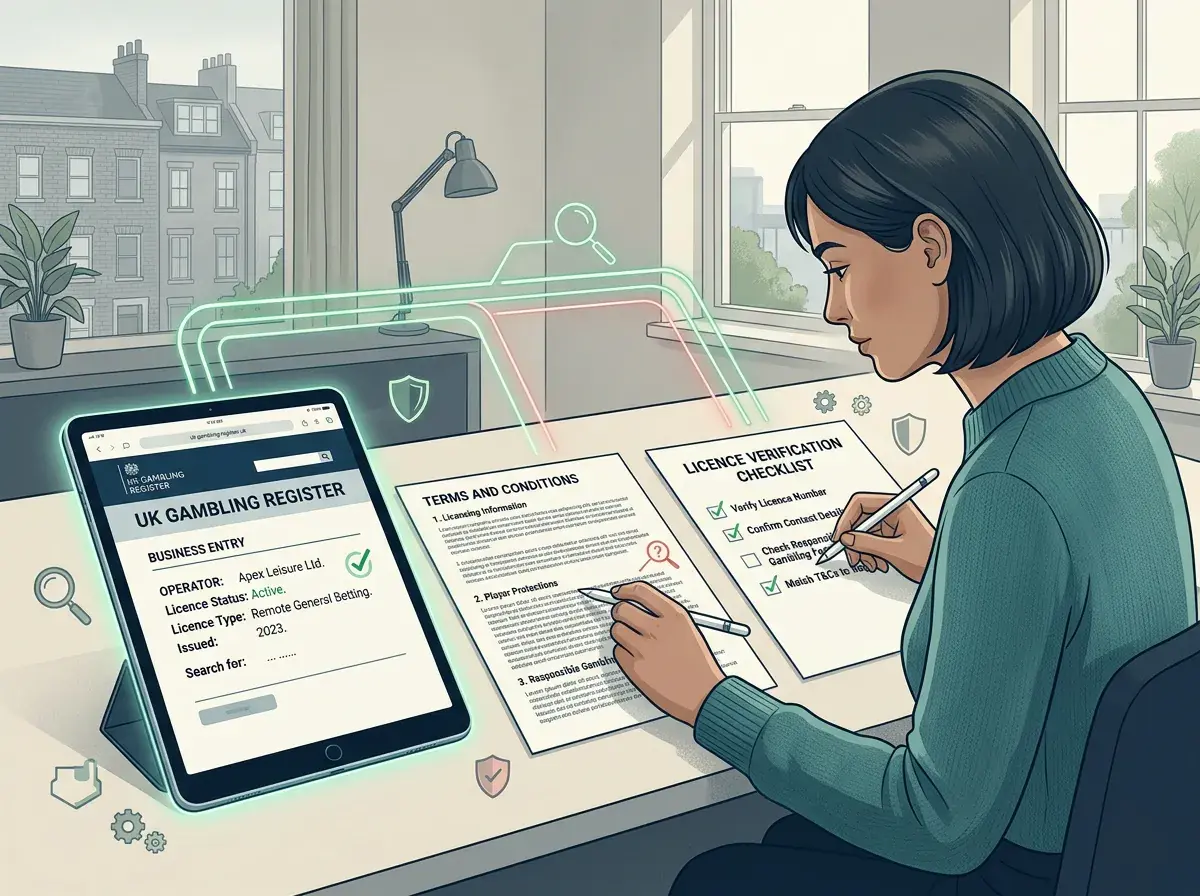
For remote gambling offered to consumers in Great Britain, the Gambling Commission licensing position is central. The Commission’s public business register can be looked up by business name, trading name, domain name or account number. That makes it a sensible first check when you are trying to identify who is actually behind a gambling site.
There are limits. The register itself explains that domain and trading-name information is provided by businesses and is not guaranteed by the Commission. That means a result should be treated as one part of a check, not as a full guarantee. You still need to compare the legal name, trading name, domain, account details and terms displayed on the site. If the details do not match, or if the business cannot be identified clearly, the safer step is to stop before depositing.
The register is not a list of recommended casinos. It is a public record for licensing information. It does not tell you that a promotion is suitable, that a withdrawal will be instant, that a customer service team will be helpful, or that a site is appropriate for someone who is self-excluded. Those questions need separate evidence and, in some cases, a support route rather than a gambling decision.
A before-deposit checklist
- Identify the legal business. Look for the company name, trading name and licence information on the site, then compare those details with the Gambling Commission business register.
- Compare the domain carefully. A similar name is not enough. Check whether the domain you are using is the one connected to the record you are reading, and remember that domain details on the register have limits.
- Read customer-funds wording. The Gambling Commission explains that customer funds are not protected like bank accounts, and gambling businesses must disclose the level of protection in their terms. That wording matters before you hold a balance with any business.
- Read withdrawal and bonus terms before accepting an offer. A bonus can change how funds are treated. For licensed operators, players must be told they can withdraw their deposit balance even when a bonus is active, subject to regulatory obligations, but the exact terms still matter.
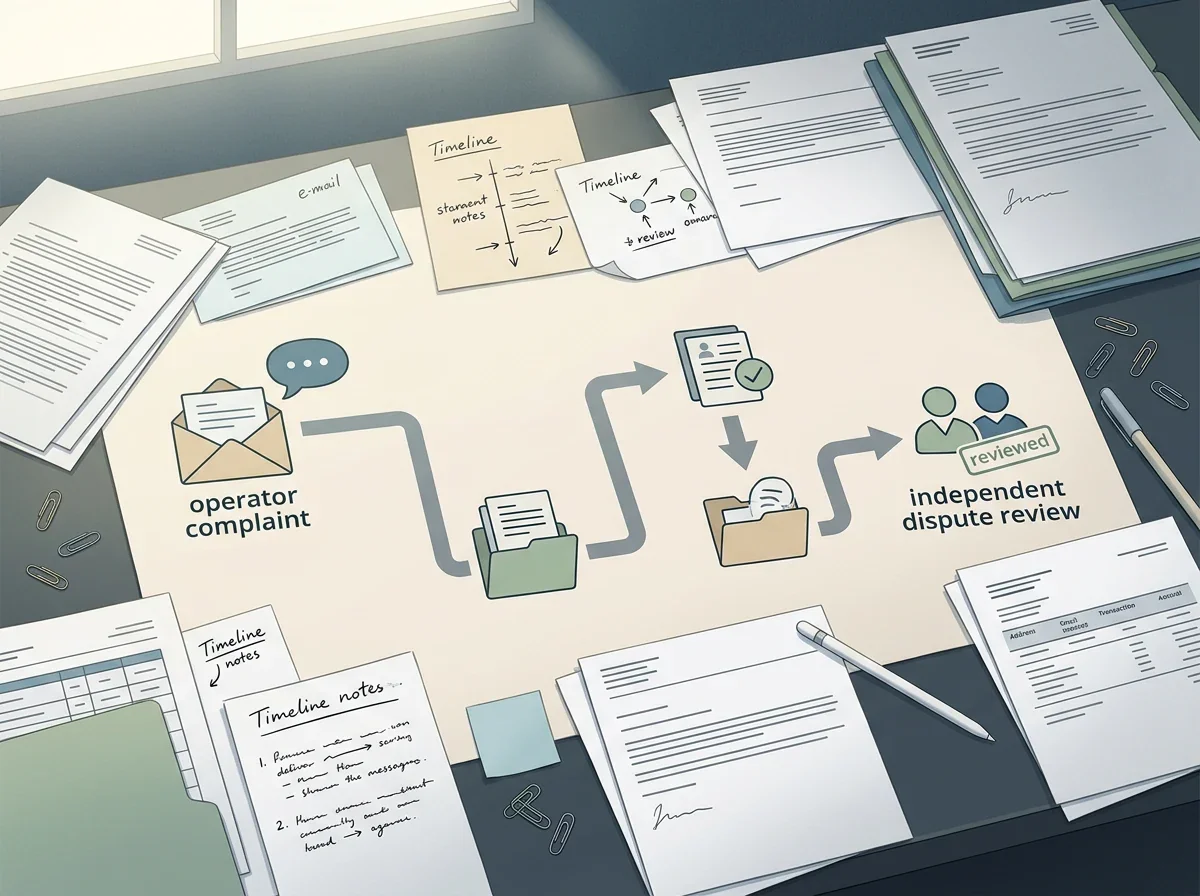
- Find the complaint route before there is a dispute. A serious business should explain how complaints are handled. For licensed operators, the Gambling Commission’s consumer guidance explains the complaint route and when ADR can become relevant.
- Check how personal data and identity documents are handled. UK data security rules require appropriate measures for personal data, but you should not use that general rule to certify a particular site. Know who is receiving your documents before uploading them.
| Check | What it can help you learn | What it cannot prove by itself | Action if unclear |
|---|---|---|---|
| Business register entry | Whether a business appears in official records for Great Britain. | It does not prove every marketing claim or term is fair today. | Compare names, domain details and account information before going further. |
| Site footer and legal page | What the site claims about its business identity and licence. | It does not replace the official register. | Treat mismatches as a reason to stop and check again. |
| Customer-funds wording | How the business describes protection if it becomes insolvent. | It does not make the balance equivalent to money held in a bank account. | Do not hold more money on a site than you are prepared to risk losing. |
| Withdrawal terms | How deposit balance, bonus conditions and checks are described. | It does not guarantee timing or remove legal checks. | Read before depositing, not after a dispute starts. |
| Complaint information | Where a dispute should start and whether an ADR route is named. | It does not guarantee that you will recover money. | Save the route and keep screenshots of terms that apply. |
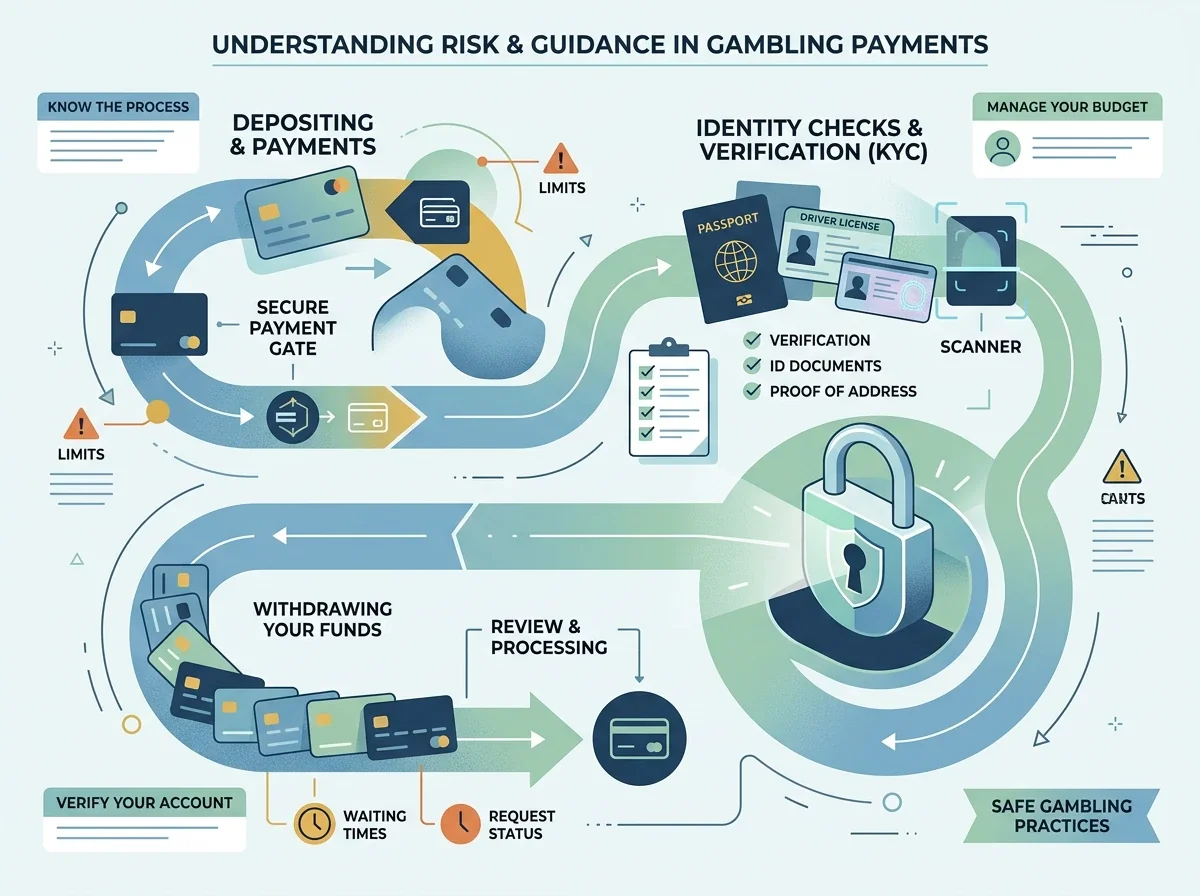
Verifying the operator’s credentials goes hand in hand with understanding the strict payments, ID checks and withdrawals required by legitimate platforms.
Terms that deserve attention before money leaves your account
Customer-funds wording is often overlooked because it does not feel urgent until something goes wrong. The Gambling Commission’s consumer information is clear that gambling balances are not protected like bank accounts. Licensed businesses must state how customer money is protected if the business becomes insolvent, but the level of protection can vary. A cautious reader checks this before depositing, not after a withdrawal delay.
Withdrawal terms deserve the same early attention. Look for how the site separates deposit balance, winnings and bonus-linked funds. Look for when identity checks can happen, what documents may be requested, how complaints are made, and whether there are restrictions that would surprise you later. Do not rely on a banner that says withdrawals are easy. Read the actual terms and save a copy of the pages that apply when you deposit.
Promotions should be treated as terms-heavy products. The safer question is not whether an offer sounds generous, but what the significant conditions are: wagering requirements, excluded games, expiry periods, withdrawal restrictions and account verification. If the important conditions are hidden, vague or split across several pages, that is not a reason to hurry. It is a reason to slow down.
Signals that should make you stop and verify first
- A site uses “not on GAMSTOP” as if missing self-exclusion coverage were a benefit.
- The business name, trading name or domain cannot be matched clearly with official records.
- The site asks for sensitive documents before you can identify the business behind it.
- Customer-funds protection is missing, vague or written in a way you do not understand.
- Withdrawal wording promises speed but gives little information about checks, disputes or bonus-linked funds.
- The site encourages people who are self-excluded to keep gambling or to treat blocks as obstacles.
- Complaint information is missing, circular or limited to a chat channel with no clear record.
None of these signals proves every outcome in advance. They do justify a pause. The purpose of a before-deposit check is to avoid being forced to solve identity, payment and complaint problems after you have already committed money.
What to do if self-exclusion is part of the reason you are checking
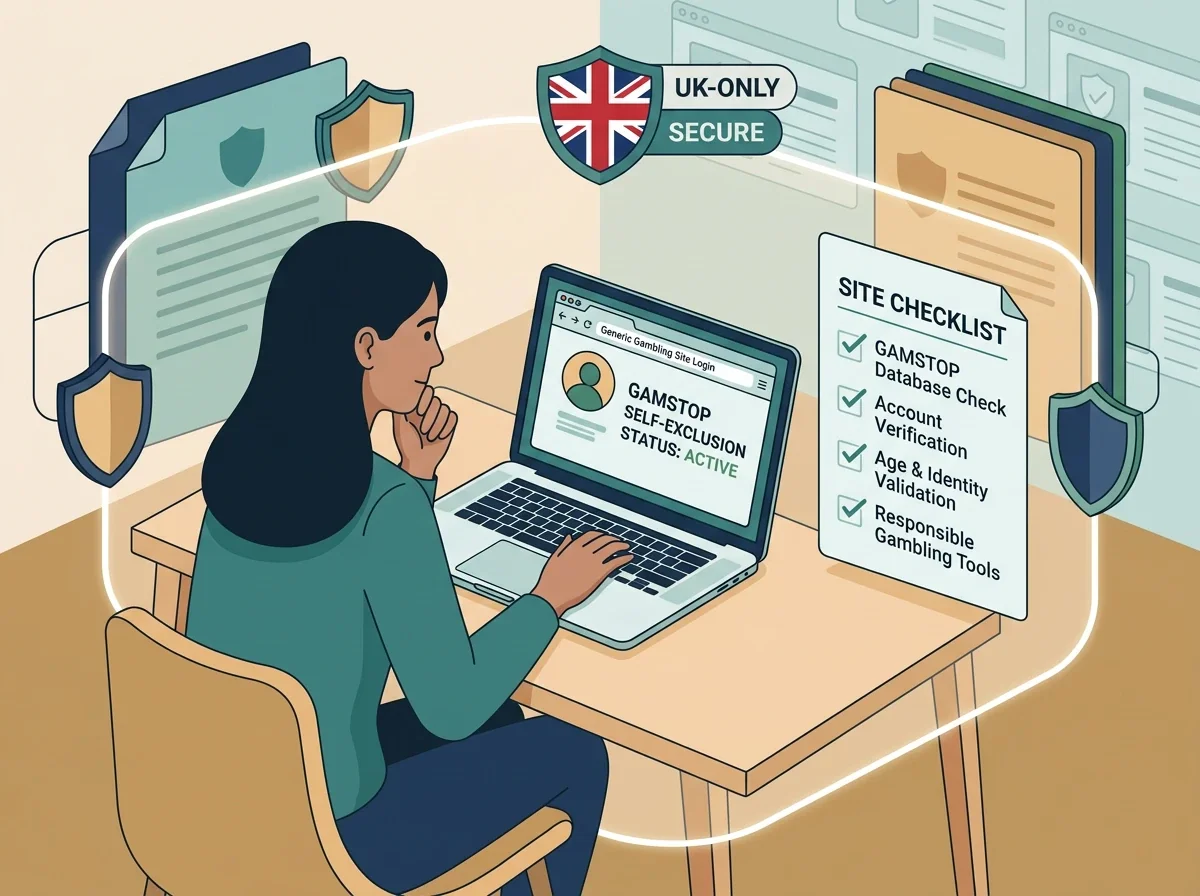
If the reason you are checking a non-participating site is that GAMSTOP blocks other gambling sites, the situation has changed. The practical task is no longer only licence checking. It is protecting the exclusion you chose. GAMSTOP’s terms and Gambling Commission guidance support the principle that users should not try to get around the scheme during self-exclusion. A careful next step can include updating details, using bank gambling blocks, adding blocking software and contacting a support organisation.
That is not a moral judgement. It is a risk boundary. A business might pass one official check and still be the wrong place for someone who is trying to stop gambling. If gambling is affecting debt, wellbeing, sleep, relationships or work, support pages such as GamCare, GambleAware, the NHS gambling help page, MoneyHelper and Citizens Advice are more relevant than another deposit decision.
Related guides
- Read what “not on GAMSTOP” means if you need the protection and scheme boundary first.
- Read payments, ID checks and withdrawals if your main question is about documents, payment blocks or payout terms.
- Read withdrawal delays and complaints if you already have a dispute.
- Read self-exclusion, blocking tools and getting help if gambling control is the real issue behind the check.
Staying informed is your best defense, which is why we provide comprehensive advice on the best independent casino safety portal for British players.
Common questions
Can the register prove a site will pay quickly?
No. The register helps with licensing and business identity. It does not guarantee service quality, withdrawal timing or the result of a future dispute.
Is an overseas licence enough for a Great Britain customer?
Not by itself. If remote gambling is offered to consumers in Great Britain, the Great Britain licensing question still needs to be checked through the Gambling Commission.
Should I upload ID before I can identify the business?
No. First identify who you are dealing with, compare official details and read data and verification terms. Sending documents to an unclear business creates avoidable risk.
Created by the "Casino not on Gamstop" editorial team.